
Conference Countdown
National Harbor, Md.
June 28-30, 2013
  • membership
  • my account
  • help

    We are here to help!

    1703 North Beauregard Street
    Alexandria, VA 22311-1714
    Tel: 1-800-933-ASCD (2723)
    Fax: 703-575-5400

    8:00 a.m. to 6:00 p.m. Eastern time, Monday through Friday

    Local to the D.C. area, 703-578-9600, press 2

    Toll-free from U.S. and Canada, 1-800-933-ASCD (2723), press 2

    All other countries (International Access Code) + 1-703-578-9600, press 2

  • Log In
  • Forgot Password?


Washington, D.C.

Conference on Teaching Excellence

June 28–30
National Harbor, Md
.

Get up-to-date on recent revelations about best practices in the classroom, how to make them routine in every grade and subject, and how to scale them systemwide. 

Permissions

ASCD respects intellectual property rights and adheres to the laws governing them. Learn more about our permissions policy and submit your request online.

Policies and Requests

Translations Rights

Books in Translation

Premium, Select, and Institutional Plus Member Book (Nov 2003)
Related Topics

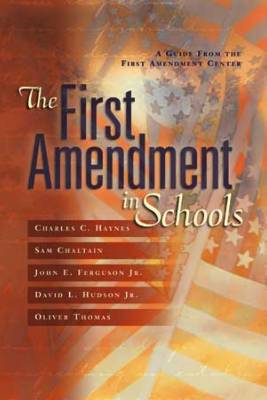
First Amendment in Schools

by Charles C. Haynes, Sam Chaltain, John E. Ferguson Jr., David L. Hudson Jr. and Oliver Thomas

Table of Contents

Chapter 1. Part II. Core Issues for All Schools to Consider

1. Does the First Amendment apply to public schools?

Yes. The First Amendment applies to all levels of government, including public schools. Although the courts have permitted school officials to limit the rights of students under some circumstances, the courts have also recognized that students—like all citizens—are guaranteed the rights protected by the First Amendment.

Earlier in our history, however, the First Amendment did not apply to the states—and thus not to public schools. When adopted in 1791, the First Amendment applied only to Congress and the federal government (“Congress shall make no law . . .”). This meant that when public schools were founded in the mid-19th century, students could not make First Amendment claims against the actions of school officials.

The restrictions on student speech lasted into the 20th century. In 1908, for example, the Wisconsin Supreme Court ruled that school officials could suspend two students for writing a poem ridiculing their teachers that was published in a local newspaper.1  The Wisconsin court reasoned, “such power is essential to the preservation of order, decency, decorum, and good government in the public schools.” And in 1915, the California Court of Appeals ruled that school officials could suspend a student for criticizing and “slamming” school officials in a student assembly speech.2 

In fact, despite the passage of the 14th Amendment in 1868, which provides that “no state shall . . . deprive any person of life, liberty or property without due process of law . . .”, it was not until 1925, by way of the Supreme Court case of Gitlow v. New York, that the Supreme Court held that the freedom of speech guaranteed by the First Amendment is one of the “liberties” incorporated by the Due Process Clause of the 14th Amendment.

In subsequent cases, the Court has applied all of the freedoms of the First Amendment to the states—and thus to public schools—through the 14th Amendment. But not until 1943, in the flag-salute case of West Virginia v. Barnette,3  did the U.S. Supreme Court explicitly extend First Amendment protection to students attending public schools.

The Barnette case began when several students who were Jehovah's Witnesses refused to salute the flag for religious reasons. School officials punished the students and their parents. The students then sued, claiming a violation of their First Amendment rights.

At the time that the students sued, Supreme Court precedent painted a bleak picture for their chances. Just a few years earlier, the Court had ruled in favor of a similar compulsory flag-salute law in Minersville School District v. Gobitis.4  As the Court stated in that ruling, “national unity is the basis of national security.”

However, the high court reversed itself in Barnette, holding that the free speech and free exercise of religion provisions of the First Amendment guarantee the right of students to be excused from the flag salute on grounds of conscience.

Writing for the majority, Justice Robert Jackson said that the Supreme Court must ensure “scrupulous protection of constitutional freedoms of the individual, if we are not to strangle the free mind at its source and teach youth to discount important principles of our government as mere platitudes.”5  The Court then warned of the dangers of coercion by government in oft-cited, eloquent language:

If there is any fixed star in our Constitutional constellation, it is that no official, high or petty, can prescribe what shall be orthodox in politics, nationalism, religion, or other matters of opinion or force citizens to confess by word or act their faith therein.6 

Religious Liberty: The Establishment Clause

2. The First Amendment says that the government may not “establish” religion. What does that mean in a public school?

The meaning of the Establishment Clause, often referred to as the “separation of church and state,” has been much debated throughout our history. Does it require, as described in Thomas Jefferson's famous 1801 letter to the Danbury Baptists, a high “wall of separation”? Or may government support religion as long as no one religion is favored over others? How can school officials determine when they are violating the Establishment Clause?

In the last several decades, the Supreme Court has crafted several tests to determine when state action becomes “establishment” of religion. No one test is currently favored by a majority of the Court. Nevertheless, no matter what test is used, it is fair to say that the Court has been stricter about applying the Establishment Clause in public schools than in other government settings. For example, the Court has upheld legislative prayer, but struck down teacher-led prayer in public schools.7  The Court applies the Establishment Clause more rigorously in public schools, mostly for two reasons: (1) students are impressionable young people, and (2) they are a “captive audience” required by the state to attend school.

When applying the Establishment Clause to public schools, the Court often emphasizes the importance of “neutrality” by school officials toward religion. This means that public schools may neither inculcate nor inhibit religion. They also may not prefer one religion over another—or religion over nonreligion.

3. If school officials are supposed to be “neutral” toward religion under the Establishment Clause, does that mean they should keep religion out of public schools?

No. By “neutrality” the Supreme Court does not mean hostility to religion. Nor does it mean ignoring religion. Neutrality means protecting the religious liberty rights of all students while simultaneously rejecting school endorsement or promotion of religion.

In 1995, 24 major religious and educational organizations defined religious liberty in public schools this way:

Public schools may not inculcate nor inhibit religion. They must be places where religion and religious conviction are treated with fairness and respect.
Public schools uphold the First Amendment when they protect the religious liberty rights of students of all faiths or none. Schools demonstrate fairness when they ensure that the curriculum includes study about religion as an important part of a complete education.8 

4. Does the Establishment Clause apply to students in a public school?

The Establishment Clause speaks to what government may or may not do. It does not apply to the private speech of students. School officials should keep in mind the distinction between government (in this case “school”) speech endorsing religion—which the Establishment Clause prohibits—and private (in this case “student”) speech endorsing religion, which the free speech and free exercise clauses protect.9 

Student religious expression may, however, raise Establishment Clause concerns when such expression takes place before a captive audience in a classroom or at a school-sponsored event. Students have the right to pray alone or in groups or to discuss their faith with classmates, as long as they aren't disruptive or coercive. And they may express their religious views in class assignments or discussions, as long as it is relevant to the subject under consideration and meets the requirements of the assignment.10  But students don't have a right to force a captive audience to participate in religious exercises.

It isn't entirely clear under current law where teachers and administrators may draw a line limiting student religious expression before a captive audience in a classroom or school-sponsored event. In several recent cases, lower courts have deferred to the judgment of educators about when to limit the religious expression of students in a classroom or school setting. A general guide might be to allow students to express their religious views in a classroom or at a school event as long as they don't ask the audience to participate in a religious activity, use the opportunity to deliver a proselytizing sermon, or give the impression that their views are supported by or endorsed by the school.11 

5. How can school officials tell when a planned school action or activity might violate the Establishment Clause?

Here are some questions that teachers and administrators should ask themselves when planning activities that may involve religious content (e.g., a holiday assembly in December):

  • Do I have a distinct educational or civic purpose in mind? If so, what is it? (It may not be the purpose of the public school to promote or denigrate religion.)
  • Have I done what I can to ensure that this activity is not designed in any way to either promote or inhibit religion?
  • Does this activity serve the educational mission of the school or the academic goals of the course?
  • Have I done what I can to ensure that no student or parent may be made to feel like an outsider, and not a full member of the community, by this activity?
  • If I am teaching about religion, am I balanced, accurate, and academic in my approach?

Religious Liberty: The Free Exercise Clause

6. What does “free exercise” of religion mean under the First Amendment?

The Free Exercise Clause of the First Amendment states that the government “shall make no law . . . prohibiting the free exercise of religion.” Although the text sounds absolute, “no law” does not always mean “no law.” The Supreme Court has had to place some limits on the freedom to practice religion. To take an easy example cited by the Court in one of its landmark “free exercise” cases, the First Amendment would not protect the practice of human sacrifice even if some religion required it.12  In other words, while the freedom to believe is absolute, the freedom to act on those beliefs is not.

But where may government draw the line on the practice of religion? The courts have struggled with the answer to that question for much of our history. Over time, the Supreme Court developed a test to help judges determine the limits of free exercise. First fully articulated in the 1963 case of Sherbert v. Verner, this test is sometimes referred to as the Sherbert or “compelling interest” test. The test has four parts: two that apply to any person who claims that his freedom of religion has been violated, and two that apply to the government agency accused of violating those rights.

For the individual, the court must determine

  • whether the person has a claim involving a sincere religious belief, and
  • whether the government action is a substantial burden on the person's ability to act on that belief.
If these two elements are established, then the government must prove
  • that it is acting in furtherance of a “compelling state interest,” and
  • that it has pursued that interest in the manner least restrictive, or least burdensome, to religion.13 

The Supreme Court, however, curtailed the application of the Sherbert test in the 1990 case of Employment Division v. Smith. In that case, the Court held that a burden on free exercise no longer had to be justified by a compelling state interest if the burden was an unintended result of laws that are generally applicable.14 

After Smith, only laws (or government actions) that (1) were intended to prohibit the free exercise of religion, or (2) violated other constitutional rights, such as freedom of speech, were subject to the compelling interest test. For example, a state could not pass a law stating that Native Americans are prohibited from using peyote, but it could accomplish the same result by prohibiting the use of peyote by everyone.

In the wake of Smith, many religious and civil liberties groups have worked to restore the Sherbert test—or compelling interest test—through legislation. These efforts have been successful in some states. In other states, the courts have ruled that the compelling interest test is applicable to religious claims by virtue of the state's own constitution. In many states, however, the level of protection for free exercise claims is uncertain.

Accommodating the Religious Needs and Requirements of Students

7. How should school officials determine when they must accommodate a religious liberty claim under the Free Exercise Clause?

As noted previously, the application of the Sherbert or compelling interest test was sharply curtailed by the 1990 Supreme Court decision, Employment Division v. Smith. But some states—such as Florida, Texas, and Connecticut—have passed laws requiring the use of a “compelling interest test” in free exercise cases. Moreover, since most cases involving public schools involve more than one constitutional right (e.g., the religion claim can be linked with a parental right or free speech claim), some might argue that the compelling interest test must be used even under Smith.

Regardless of how this is eventually settled in the courts, public schools fulfill the spirit of the First Amendment when they use the Sherbert test to accommodate the religious claims of students and parents where feasible.

8. May students be excused from parts of the curriculum for religious reasons?

As good educational policy, school officials, whenever possible, should try to accommodate the requests of parents and students for excusal for religious reasons from specific classroom discussions or activities.

In “A Parent's Guide to Religion in the Public Schools,” the National PTA and the First Amendment Center give the following advice concerning excusal requests:

If focused on a specific discussion, assignment, or activity, such requests should be routinely granted to strike a balance between the student's religious freedom and the school's interest in providing a well-rounded education. If it is proved that particular lessons substantially burden a student's free exercise of religion and if the school cannot prove a compelling interest in requiring attendance, some courts may require the school to excuse the student.15 

It is important for teachers and administrators to ask themselves the questions posed in the Sherbert test as they make decisions about how to accommodate excusal requests.

Let's look at one example of how the Sherbert test might be used in a public school: If parents ask for their child to be excused from reading a particular book for religious reasons, the teacher and administrator should first ask if the request is based on a sincere religious belief. Note that the religious belief need not be rational or even sensible to the school official. It need only be sincere. When parents and students take the time to object to a particular reading or activity, they are usually sincere.

Next, school officials must determine whether or not reading the assigned book would constitute a “substantial burden” on the student's religious liberty rights. This is more difficult to determine, but in most cases, if the parent and student find the book deeply offensive to their religious beliefs, then making the student read the book would likely be a substantial burden on her religious freedom.

The inquiry then shifts to the school, which needs to demonstrate it has a “compelling state interest”—described by the Supreme Court as “an interest of the highest order.”16  Clearly, public schools have a compelling interest in the education and welfare of children. In this instance, for example, the school clearly has a compelling interest in teaching the student to read. But the last part of the test requires that the school pursue that interest in a manner least restrictive of a complaining family's religion. Thus the school may have an interest in teaching the student to read, but can that interest be accomplished without making the student read that particular book? In other words, the school should choose a course of action that does not violate the student's religion if such a course of action is available and feasible for the school.

This may be easy to do if a student and parent object to a particular reading assignment on religious grounds. When this happens, the teacher may simply assign an alternate selection. If, however, requests for exemption become too frequent or too burdensome for the school, a court will probably find the school's refusal to offer additional alternatives to be justified.

9. How should school officials respond to requests for accommodation of religious practices during the school day?

Enforcing adherence to religious requirements, such as special diet or dress, is the responsibility of parents and students, not of the public school.

However, some religious requirements or practices may conflict with school practices or schedules. In those cases, school officials should try to accommodate these needs if feasible. Let's look at a few examples.

Jehovah's Witnesses may ask that their children be excused from birthday or holiday activities. Teachers should honor these requests by planning alternate activities or time in the library for affected students.

The school may have a “no caps” policy because of concerns about gang activity. But exemptions should be made for Orthodox Jews and other students who must wear head coverings for religious reasons.

Muslim students may request permission to pray in a designated area during the school day. If space is available, and if the educational process isn't disrupted, schools should try to grant this request. Schools may not set up “prayer rooms,” but they may find ways to allow students to meet their religious obligations.

Students of various faiths may have dietary restrictions. Under the Establishment Clause, schools may not prepare special foods to fulfill a student's particular religious requirements. But schools may help their religious students and others by labeling foods and offering a variety of choices at every meal.

As noted in the answer to Question 6, it is not entirely clear under current law how much accommodation schools must make for “free exercise” claims. And the legal requirement to accommodate requests may vary from state to state, depending on state law and state constitutional provisions. Nevertheless, schools uphold the principles of religious liberty and the spirit of the First Amendment when they make every effort to accommodate religious requests for exemption from school policies or practices.

10. May students be absent for religious holidays?

Schools should have policies concerning absences that take into account the religious needs and requirements of students. Students should be allowed a reasonable number of excused absences, without penalties, to observe religious holidays within their traditions. Students may be asked to complete makeup assignments or tests in conjunction with such absences.

School Prayer and Student Religious Expression

11. Is it legal for students to pray in public schools?

Yes. Contrary to popular myth, the Supreme Court has never outlawed “prayer in schools.” Students are free to pray alone or in groups, as long as such prayers are not disruptive and do not infringe upon the rights of others. But this right “to engage in voluntary prayer does not include the right to have a captive audience listen or to compel other students to participate.”17 

What the Supreme Court has repeatedly struck down are state-sponsored or state-organized prayers in public schools.

The Supreme Court has made clear that prayers organized or sponsored by a public school—even when delivered by a student—violate the First Amendment, whether in a classroom, over the public address system, at a graduation exercise, or even at a high school football game.18 

12. May students share their religious faith in public schools?

Yes. Students are free to share their faith with their peers, as long as the activity is not disruptive and does not infringe upon the rights of others.

School officials possess substantial discretion to impose rules of order and other pedagogical restrictions on student activities. But they may not structure or administer such rules to discriminate against religious activity or speech.

This means that students have the same right to engage in individual or group prayer and religious discussion during the school day as they do to engage in other comparable activities.19  For example, students may read their Bibles or other scriptures, say grace before meals, and pray before tests.

Generally, students may share their faith or pray in a nondisruptive manner when not engaged in school activities or instruction, subject to the rules that normally pertain in the applicable setting. Specifically, students in informal settings, such as cafeterias and hallways, may pray and discuss their religious views with each other, subject to the same rules of order as applied to other student activities and speech.20 

Students may also speak to and attempt to persuade their peers about religious topics just as they do with regard to political topics. School officials, however, should intercede if a student's speech begins to constitute harassment of a student or group of students.

Students may also participate in before- or after-school events with religious content, such as “See You at the Pole” gatherings, on the same terms as they may participate in other noncurriculum activities on school premises. School officials may neither discourage nor encourage participation in such an event.

Keep in mind, however, that the right to engage in voluntary prayer or religious discussion free from discrimination does not necessarily include the right to preach to a “captive audience,” like an assembly, or to compel other students to participate. To that end, teachers and school administrators should work to ensure that no student is in any way coerced—either psychologically or physically—to participate in a religious activity.21 

13. May students express their beliefs about religion in classroom assignments or at school-sponsored events?

Yes, within limits. Generally, if it is relevant to the subject under consideration and meets the requirements of the assignment, students should be allowed to express their religious or nonreligious views during a class discussion, as part of a written assignment, or as part of an art activity.

This does not mean, however, that students have the right to compel a captive audience to participate in prayer or listen to a proselytizing sermon. School officials should allow students to express their views about religion, but should draw the line when students wish to invite others to participate in religious practices or want to give a speech that is primarily proselytizing. There is no bright legal line that can be drawn between permissible and impermissible student religious expression in a classroom assignment or at a school-sponsored event. In recent lower court decisions, judges have deferred to the judgment of educators to determine where to draw the line.22 

14. Is it constitutional for a public school to require a “moment of silence?”

Yes, if, and only if, the moment of silence is genuinely neutral. A neutral moment of silence that does not encourage prayer over any other quiet, contemplative activity will not be struck down, even though some students may choose to use the time for prayer.23 

If a moment of silence is used to promote prayer, it will be struck down by the courts. In Wallace v. Jaffree the Supreme Court struck down an Alabama “moment of silence” law because it was enacted for the express purpose of promoting prayer in public schools.24  At the same time, however, the Court indicated that a moment of silence would be constitutional if it is genuinely neutral. Many states and local school districts currently have moment-of-silence policies in place.

15. May a student pray at graduation exercises or at other school-sponsored events?

This is one of the most confusing and controversial areas of the current school prayer debate. While the courts have not clarified all of the issues, some are clearer than others.

For instance, inviting outside adults to lead prayers at graduation ceremonies is clearly unconsitutional. The Supreme Court resolved this issue in the 1992 case Lee v. Weisman, which began when prayers were delivered by clergy at a middle school's commencement exercises in Providence, Rhode Island.25  The school designed the program, provided for the invocation, selected the clergy, and even supplied guidelines for the prayer.

Therefore, the Supreme Court held that the practice violated the First Amendment's prohibition against laws “respecting an establishment of religion.” The majority based its decision on the fact that (1) it is not the business of schools to sponsor or organize religious activities, and (2) students who might have objected to the prayer were subtly coerced to participate. This psychological coercion was not resolved by the fact that attendance at the graduation was “voluntary.” In the Court's view, few students would want to miss the culminating event of their academic career.

A murkier issue is student-initiated, student-led prayer at school-sponsored events. On one side of the debate are those who believe that student religious speech at graduation ceremonies or other school-sponsored events violates the Establishment Clause. They are bolstered by the 2000 Supreme Court case of Santa Fe v. Doe,26  which involved the traditional practice of student-led prayers over the public address system before high school football games.

According to the district, students would vote each year on whether they would have prayers at home football games. If they decided to do so, they would then select a student to deliver the prayers. To ensure fairness, the school district said it required these prayers to be “non-sectarian [and] non-proselytizing.”

A 6 to 3 majority of the Supreme Court still found the Santa Fe policy to be unconstitutional. The majority opinion first pointed out that constitutional rights are not subject to a vote. To the contrary, the judges said the purpose of the Bill of Rights was to place some rights beyond the reach of political majorities. Thus, the Constitution protects a person's right to freedom of speech, press, or religion even if no one else agrees with the ideas a person professes.27 

In addition, the Court found that having a student, as opposed to an adult, lead the prayer did not solve the constitutional dilemma. A football game is still a school-sponsored event, they held, and the school was still coercing the students, however subtly, to participate in a religious exercise.28 

Finally, the Court ruled that the requirement that the prayer be “nonsectarian” and “non-proselytizing” not only failed to solve the problems addressed in Lee v. Weisman, it may have aggravated them.29  In other words, while some might like the idea of an inclusive, nonsectarian “civil” religion, others might not. To some people, the idea of nonsectarian prayer is offensive, as though a prayer were being addressed “to whom it may concern.” Moreover, the Supreme Court made clear in Lee v. Weisman that even nondenominational prayers or generic religiosity may not be established by the government at graduation exercises.30 

Another thorny part of this issue is determining whether a particular prayer tends to proselytize. Such determinations entangle school officials in religious matters in unconstitutional ways. In fact, one Texas school district was sued for discriminating against those who wished to offer more sectarian prayers at graduation exercises.

On the other side of this debate are those who contend that not allowing students to express themselves religiously at school events violates the students' free exercise of religion and free speech rights.

Case law indicates, however, that this may be true only in instances involving strictly student speech, and not when a student is conveying a message controlled or endorsed by the school. As the 11th Circuit case of Adler v. Duval County suggests, it would seem possible for a school to provide a forum for student speech within a graduation ceremony when prayer or religious speech might occur.31 

For example, a school might allow the valedictorian or class president an opportunity to speak during the ceremony. If such a student chose to express a religious viewpoint, it seems unlikely it would be found unconstitutional unless the school had suggested or otherwise encouraged the religious speech.32  In effect, this means that in order to distance itself from the student's remarks, the school must create a limited open forum for student speech in the graduation program.

Again, there is a risk for school officials in this approach. By creating a limited open forum for student speech, the school may have to accept almost anything the student wishes to say. Although the school would not be required to allow speech that was profane, sexually explicit, defamatory, or disruptive, the speech could include political or religious views offensive to many, as well as speech critical of school officials.

If school officials feel a solemnizing event needs to occur at a graduation exercise, a neutral moment of silence might be the best option. This way, everyone could pray, meditate, or silently reflect on the previous year's efforts in her own way.

16. Are baccalaureate services constitutional?

Yes, if they are privately sponsored. Public schools may not sponsor religious baccalaureate ceremonies. But parents, faith groups, and other community organizations are free to hold such services for students who wish to attend. The school may announce the baccalaureate in the same way it announces other community events. If the school allows community groups to rent or otherwise use its facilities after hours, then a privately sponsored baccalaureate may be held on campus under the same terms offered to any private group.

Student Extracurricular Clubs and Activities

17. May students form religious or political clubs in secondary public schools?

Yes, if the school allows other extracurricular (noncurriculum-related) groups. Although schools do not have to open or maintain a limited open forum, once they do, they may not discriminate against a student group because of the content of its speech.

The Equal Access Act (EAA), passed by Congress in 1984 and upheld as constitutional by the Supreme Court in 1990, makes it “unlawful for any public secondary school that receives federal funds and which has a limited open forum to deny equal access or a fair opportunity to, or discriminate against, any students who wish to conduct a meeting within that limited open forum on the basis of the religious, political, philosophical, or other content of the speech at such meetings.”

The EAA covers student-initiated and student-led clubs in secondary schools with a limited open forum. According to the act, “non-school persons may not direct, conduct, or regularly attend activities of student groups.”

A “limited open forum” is created whenever a public secondary school provides an opportunity for one or more “noncurriculum related groups” to meet on school premises during noninstructional time. The forum created is said to be “limited” because only the school's students can take advantage of it.

18. What is a “noncurriculum related student group” under the Equal Access Act?

In the 1990 Supreme Court case of Westside Community Schools v. Mergens,33  the Court interpreted a “noncurriculum related student group” to mean “any student group [or club] that does not directly relate to the body of courses offered by the school.”

According to the Court, a student group directly relates to a school's curriculum only if (1) the subject matter of the group is actually taught, or will soon be taught, in a regularly offered course; (2) the subject matter of the group concerns the body of courses as a whole; or (3) participation in the group is required for a particular course or results in academic credit.

As examples, the Court identified three groups that were noncurriculum related at the Westside schools: (1) a scuba club, (2) a chess club, and (3) a service club. The Court found these groups to be noncurriculum related because they did not meet the criteria set forth above. Conversely, the French club was found to be curriculum related since the school regularly offered French classes.

Subject to review by the courts, local school authorities must determine whether a student group is curriculum related or not. Schools may not, however, substitute their own definition of “noncurriculum related” for the definition provided by the Court.

If the school violates the EAA, an aggrieved person may bring suit in U.S. district court to compel the school to observe the law. Although violations of equal access will not result in the loss of federal funds, the school could be liable for damages and the attorney's fees of a student group that successfully challenges a denial to meet under the act.

19. What control does the school retain over student meetings in a limited open forum?

The EAA does not take away a school's authority to establish reasonable time, place, and manner regulations for a limited open forum. For example, a school may establish for its student clubs a reasonable meeting time on any one school day, a combination of days, or all school days. It may assign the rooms in which student groups can meet. It may enforce order and discipline during the meetings. The key, however, is that the school's time, place, and manner regulations must be uniform, nondiscriminatory, and neutral in viewpoint.

20. May teachers or other school employees participate in student religious clubs?

No. The EAA states that “employees or agents of the school or government are present at religious meetings only in a nonparticipatory capacity.”

For insurance purposes, or because of state law or local school policy, teachers or other school employees are commonly required to be present during student meetings. But if the student club is religious in nature, school employees may be present as monitors only. Such custodial supervision does not constitute sponsorship or endorsement of the group by the school.

21. May religious leaders or other outside adults attend the meetings of student clubs?

Yes, if the students invite these visitors and if the school does not have a policy barring all guest speakers or outside adults from extracurricular club meetings. However, the EAA states that the nonschool persons “may not direct, conduct, control, or regularly attend activities of student groups.”34 

22. May noncurriculum-related student groups use school media to advertise their meetings?

Yes. A student group may use school media—such as the public address system, school paper, and school bulletin board—as long as other noncurriculum-related student groups are allowed to do so. Any policy concerning the use of school media must be applied to all noncurriculumrelated student groups in a nondiscriminatory manner. Schools, however, may issue disclaimers indicating that extracurricular student groups are not school sponsored or endorsed.

23. May the school exclude any student extracurricular group?

Yes. According to guidelines endorsed by a broad coalition of educational and religious liberty organizations, “student groups that are unlawful, or that materially and substantially interfere with the orderly conduct of educational activities, may be excluded. However, a student group cannot be denied equal access simply because its ideas are unpopular. Freedom of speech includes the ideas the majority may find repugnant.”35 

Most schools require students to submit a statement outlining the purpose and nature of the proposed club. School officials do not have to allow meetings of groups that advocate violence or hate or engage in illegal activity. This does not mean, however, that schools may bar students from forming clubs to discuss controversial social and legal issues such as abortion or sexual orientation. Again, student-initiated clubs in a limited open forum may not be barred on the basis of the viewpoint of their speech.

Some schools require parental permission for students to join an extracurricular club. Although this step is not required by the EAA, it has enabled schools to keep the forum open in communities where student clubs have sparked controversy.

24. Do students have the right to form religious or political clubs below the secondary level?

Probably not, but current law is unclear on this point. Although the EAA does not apply to public schools below the secondary level, some have argued that the Free Speech Clause protects the right of middle school students to form religious or political clubs on an equal footing with other student-initiated clubs. When the EAA was debated in Congress, many lawmakers expressed doubt that young children could form religious clubs that would be truly initiated and led by students. In addition, younger students are more likely to view religious clubs meeting at the school as “school sponsored.” For these and other reasons, Congress declined to apply equal access below the secondary level.

May administrators permit students to form religious or political clubs in middle schools, even if the law does not require that such clubs be allowed? Again, current law is unclear on this point. If school officials decide to allow middle school students to form religious or political clubs, then at the very least the school should have in place a clear policy and ground rules for the clubs, consistent with the EAA, and explain that the student clubs are not school sponsored.

25. May students solicit funds at school?

Yes, a school may allow students to solicit funds, but students have no independent right to do so. Although courts have seldom addressed this question, the few cases that are available make clear that schools may prohibit students from soliciting funds while at school.

In the seminal case on this issue, the Second Circuit Court of Appeals ruled in Katz v. McAulay that the Union Free School District's policy prohibiting solicitation on school grounds did not violate the First Amendment rights of students. The court found that students were a captive audience during the school day, and to allow them to be solicited, by outside adults or even other students, would be intrusive to students and act as a distraction from the educational mission of the school.36 

26. What First Amendment rights do students retain at school-sponsored social events?

At school-sponsored social events, the conduct and regulation of students have constitutional implications.

In particular, issues involving gay and lesbian students wishing to bring a date of the same sex to school social events have raised controversy. In one case, for example, a senior male student wanted to bring a male date to the senior banquet. The school rejected the student's request, citing fears of violence against the couple.

The school's rationale, however, did not convince the court, which found that a same-sex couple attending a school function was an expressive act, and as such was protected by the First Amendment. As to claims of possible violence, the judge stated:

I have concluded that even a legitimate interest in school discipline does not outweigh a student's right to peacefully express his views in an appropriate time, place, and manner. To rule otherwise would completely subvert free speech in the schools by granting other students a “heckler's veto,” allowing them to decide through prohibited and violent methods what speech will be heard. The First Amendment does not tolerate mob rule by unruly school children.37 

Teaching About Religion

27. Is it constitutional to teach about religion in a public school?

Yes. In the 1960s-school-prayer cases that prompted rulings against state-sponsored school prayer and devotional Bible reading, the U.S. Supreme Court indicated that public school education may include teaching about religion. In Abington v. Shempp, Associate Justice Tom Clark wrote for the Court:

[I]t might well be said that one's education is not complete without a study of comparative religion or the history of religion and its relationship to the advancement of civilization. It certainly may be said that the Bible is worthy of study for its literary and historic qualities. Nothing we have said here indicates that such study of the Bible or of religion, when presented objectively as part of a secular program of education may not be effected consistently with the First Amendment.38 

28. What does it mean to teach “about” religion under the First Amendment?

The key is to understand the difference between the teaching of religion—that is, religious indoctrination or faith formation—and teaching about religion—that is, the academic study of religion. The distinction may be summarized this way:

  • The school's approach to religion is academic, not devotional.
  • The school strives for student awareness of religions, but does not press for student acceptance of any religion.
  • The school sponsors study about religion, not the practice of religion.
  • The school may expose students to a diversity of religious views, but may not impose any particular view.
  • The school educates about all religions; it does not promote or denigrate religion.
  • The school informs students about various beliefs; it does not seek to make students conform to any particular belief.39 

Classroom discussions concerning religion must be conducted in an environment that is free of advocacy on the part of the teacher. Students may express their own religious views, as long as such expression is germane to the discussion. But public school teachers are required by the First Amendment to teach about religion fairly and objectively, neither promoting nor denigrating religion in general or specific religious groups in particular. When discussing religion, many teachers must guard against injecting personal religious beliefs by teaching through attribution (e.g., by using such phrases as “most Buddhists believe . . .” or “according to the Hebrew scriptures . . .”).

29. Why should study about religion be included in the curriculum?

Growing numbers of educators throughout the United States recognize that study about religion in social studies, literature, art, music, and other subjects is an important part of a well-rounded education. “Religion in the Public School Curriculum: Questions and Answers,” issued by a coalition of seventeen major religious and educational organizations, describes the importance of religion in the curriculum this way:

Because religion plays a significant role in history and society, study about religion is essential to understanding both the nation and the world. Omission of facts about religion can give students the false impression that the religious life of humankind is insignificant or unimportant. Failure to understand even the basic symbols, practices, and concepts of the various religions makes much of history, literature, art, and contemporary life unintelligible.
Study about religion is also important if students are to value religious liberty, the first freedom guaranteed in the Bill of Rights. Moreover, knowledge of the roles of religion in the past and present promotes cross-cultural understanding essential to democracy and world peace.40 
The following principles should be kept in mind as public schools address teaching about religion:
  • The Supreme Court has made clear that study about religion in public schools is constitutional.
  • Inclusion of study about religion is important for students to be broadly educated about some of the major ways in which people understand the world.
  • Religion must be taught objectively and neutrally. The purpose of public schools is to educate students about a variety of religious traditions, not to promote or indoctrinate them into any tradition.41 

30. Does the First Amendment require that “equal time” be given to all faiths in the public school curriculum?

No. The grade level of the students and the academic requirements of the course should determine which religions to study and how much to discuss about religion.

In the elementary grades, the study of family, community, culture, history, literature, the nation, and other themes and topics should naturally involve some discussion of religion. Elementary students are introduced to the basic ideas and practices of the world's major religions by focusing on the generally agreed-upon meanings of religious faiths—the core beliefs and symbols as well as important figures and events. Stories drawn from various faiths may be included among the wide variety of stories read by students, but the material selected must always be presented in the context of learning about religion.

On the secondary level, the social studies, literature, and the arts offer opportunities for the inclusion of study about religions, their ideas, and practices. The academic needs of the course should determine which religions are studied and how much time is required to provide an adequate understanding of the concepts and practices under consideration.

In a U.S. history course, for example, some faith communities may be given more time than others simply because of their predominant influence on the development of the nation. In world history, a variety of faiths must be studied, based on the regions of the world, in order to understand the various civilizations and cultures that have shaped history and society.

Fair and balanced study about religion on the secondary level includes critical thinking about historical events involving religious traditions. Religious beliefs have been at the heart of some of the best and worst developments in human history. The full historical record, and various interpretations of it, should be available for analysis and discussion. Using primary sources whenever possible allows students to work directly with the historical record.

Of course, fairness and balance in U.S. or world history and literature is difficult to achieve, given the brief treatment of religious ideas and events in most textbooks and the limited time available in the course syllabus. Teachers will need scholarly supplemental resources that enable them to cover the required material within the allotted time, while enriching the discussion with study of religion. In fact, some schools now offer electives in religious studies to provide additional opportunities for students to study about the major faith communities in greater depth.

Overall, the curriculum should include all major voices, and many minor ones, in an effort to provide the best possible education.

31. Is it legal to invite guest speakers to help teach about religion?

Yes, if the school district policy allows guest speakers in the classroom.

If a guest speaker is invited, care should be taken to find someone with the academic background necessary for an objective and scholarly discussion of the historical period and the religion under consideration. Faculty from local colleges and universities often make excellent guest speakers, or they can recommend others who might be appropriate for working with students in a public school setting.

Religious leaders in the community may also be a resource. Remember, however, that they have commitments to their own faith. Above all else, be certain that any guest speaker understands the First Amendment guidelines for teaching about religion in public education and is clear about the academic nature of the assignment.

32. What is the relationship between teaching about religion and character education?

The First Amendment requires that public schools be neutral toward religion—and that means teaching about religions in ways that are objective. But this does not mean that schools should be neutral about the moral values widely shared in our society. Teachers can and should teach the personal and civic virtues, such as honesty, caring, fairness, and integrity, that are widely held in our society.

Public school teachers should teach good character and citizenship—but they must do so without either invoking religious authority or denigrating the religious or philosophical commitments of students and parents. Character education cannot use religious exercises or teachings to nurture the development of character. At the same time, however, character education should not implicitly convey the idea that religion is irrelevant to morality. In teaching core moral values, teachers should make clear that people's moral convictions are often grounded in religious traditions.

Parents are the first and most important moral educators of their children. Thus public schools should develop character education programs only in close partnership with parents and the community. Local communities need to work together to identify the core moral and civic virtues that they wish to be taught and modeled in all aspects of school life. For guidance on how to develop and implement a comprehensive, quality character education program, contact the Character Education Partnership in Washington, D. C.42 

Religious Holidays

33. How should religious holidays be treated in the classroom?

Teachers must be alert to the distinction between teaching about religious holidays, which is permissible, and celebrating religious holidays, which is not. Recognition of and information about holidays may focus on how and when they are celebrated, their origins, histories, and generally agreed-upon meanings. If the approach is objective and sensitive, neither promoting nor inhibiting religion, this study can foster understanding and mutual respect for differences in belief. Teachers may not, however, use the study of religious holidays as an opportunity to proselytize or otherwise inject their personal religious beliefs into the discussion.

The use of religious symbols is permissible as a teaching aid or resource, provided they are used only as examples of cultural or religious heritage. Religious symbols may be displayed only on a temporary basis as part of the academic lesson being studied. Students may choose to create artwork with religious symbols, but teachers should not assign or suggest such creations.

The use of art, drama, music, or literature with religious themes is permissible if it serves a sound educational goal in the curriculum. Such themes should be included on the basis of their academic or aesthetic value, and not as a vehicle for promoting religious beliefs. For example, sacred music may be sung or played as part of the academic study of music. School concerts that present a variety of selections may include religious music. Concerts should, however, avoid programs dominated by religious music, especially when these coincide with a particular religious holiday.

34. What should schools do in December?

Decisions about what to do in December should begin with the understanding that public schools may not sponsor religious devotions or celebrations; study about religious holidays does not extend to religious worship or practice.

Does this mean that all seasonal activities must be banned from the schools? Probably not, and in any event, such an effort would be unrealistic. The resolution would seem to lie in devising holiday programs that serve an educational purpose for all students—programs that make no students feel excluded or forcibly identified with a religion not their own.

Holiday concerts in December may appropriately include music related to Christmas, Hanukkah, and other religious traditions, but religious music should not dominate. Any dramatic productions should emphasize the cultural aspects of the holidays. Conversely, nativity pageants or plays portraying the Hanukkah miracle would not be appropriate in the public school setting.

In short, while recognizing the holiday season, none of the school activities in December should have the purpose, or effect, of promoting or inhibiting religion.

35. How should religious objections to holidays be handled?

Students from certain religious traditions may ask to be excused from classroom discussions or activities related to particular holidays. For example, holidays such as Halloween and Valentine's Day, which are considered by many people to be secular, are viewed by others as having religious overtones.

Excusal requests may be especially common in the elementary grades, where holidays are often marked by parties and similar nonacademic activities. Such requests should be routinely granted in the interest of creating good policy and upholding the religious liberty principles of the First Amendment.

In addition, some parents and students may make requests for excusals from discussions of certain holidays, even when these holidays are treated from an academic perspective. If these requests are focused on a limited, specific discussion, administrators should grant such requests, in order to strike a balance between the student's religious freedom and the school's interest in providing a well-rounded education.

Administrators and teachers should understand, however, that a policy or practice of excusing students from a specific activity or discussion may not be used as a rationale for school sponsorship of religious celebration or worship for the remaining students.

Use of School Facilities by Outside Groups

36. Do outside groups have the right to distribute material on campus?

No. Adults from outside the school do not have the right to distribute materials to students in a public school. May school officials allow them to do so? Although this area of the law is somewhat unclear, it is fair to say that schools should exercise great caution before giving an outside group access to students during the school day. Giving some groups access opens the door to others. Moreover, if a religious group is allowed to actively distribute religious literature to students on campus, that activity is likely to violate the Establishment Clause.

At least one lower court has upheld “passive” distribution of materials by religious and other community groups. Note that in this case the group left materials for students to browse through and take only if they wished. Also, a wide variety of community groups were given similar privileges, and the school posted a disclaimer explaining that the school did not endorse these materials. Under those conditions, this court allowed passive distribution, but only in a secondary school setting.43 

Schools may announce community events or meetings of groups—including religious groups—that work with students. All of these groups should be treated in the same way. The school should make clear that it does not sponsor these community groups.

37. May public school facilities be used by outside community groups during nonschool hours?

Generally, yes. Although schools are not required to open their facilities to any community group, when they do, all groups—including those with a religious viewpoint—must be treated the same.44  In fact, the Supreme Court has ruled unanimously that schools may not discriminate on the basis of religious viewpoint when making their facilities available to community groups during nonschool hours.45 

Schools may, of course, impose reasonable, content-neutral restrictions on the use of their facilities. For example, schools may decide when meetings may be held, how long they may last, whether they may continue during weeks or months when school is not in session, what maintenance fee must be paid, and what insurance might be required.

Some content-based restrictions may also be allowed. For example, schools may probably exclude for-profit, commercial businesses even though community nonprofits are allowed to use school facilities after hours. They may also limit the use of the facilities to such things as “educational purposes,” but such distinctions may prove difficult to administer, as many groups may claim to meet the stipulated purpose.

Schools should be aware that the imposition of content-based restrictions could raise difficult constitutional questions. For example, the Supreme Court has held in Good News v. Milford that in the case of the Good News Club, a content-based restriction excluding religious worship and instruction amounted to impermissible viewpoint discrimination.46  School districts should be especially mindful to consult with legal counsel if they decide to draft content-based restrictions.

Cooperative Agreements Between Public Schools and Religious Communities

38. May public schools and religious communities enter into cooperative agreements to help students with such programs as tutoring?

Yes, but only if appropriate constitutional safeguards are in place. Remember, public schools must remain neutral among religions and between religion and nonreligion. For that reason, religious groups must refrain from proselytizing students during any cooperative programs with public schools. Participation or nonparticipation by students in such cooperative programs should not affect the student's academic ranking or ability to participate in other school activities. In addition, cooperative programs may not be limited to religious groups, but must be open to all responsible community groups.47 

Released-Time Programs

39. May students be released for off-campus religious instruction during the school day?

Yes. Subject to applicable state laws, public schools have the discretion to release students who have parental permission to attend off-campus religious instruction during the school day. The Supreme Court in the 1952 case Zorach v. Clausen ruled “released-time” programs constitutional.48 

If a public school decides to allow released time, the program must take place off campus and must be wholly organized and run by religious or community groups and not by the school. Schools may not encourage or discourage participation by students or in any way penalize students who do not attend.

Free Expression Rights of Students

40. What are the free expression rights of students in public schools under the First Amendment?

The freedoms of speech, press, assembly, and petition are often collectively referred to as the freedom of expression, and the U.S. Supreme Court has developed a separate body of case law regarding the free expression rights of students. In defining the free expression rights of students in a public school, the Court has developed three tests from the following landmark cases.49 

I. The Tinker Standard (Tinker v. Des Moines Independent School District, 1969)

When 15-year-old John Tinker, his sister Mary Beth, 13, and Christopher Eckhardt, 16, wore black armbands to their Iowa public schools in December 1965 to protest the Vietnam conflict, they never imagined that their actions would lead to a landmark First Amendment decision. Nonetheless, their protests eventually culminated in the leading First amendment free speech case for public school students.50 

The case arose when a group of parents and students in Des Moines, Iowa, met at the Eckhardt home and decided to protest U.S. involvement in Vietnam. The group agreed that one way to protest would be to have the students wear black armbands to public schools.

School officials learned of this planned protest and quickly enacted a no-armband policy. The school then enforced its no-armband rule while allowing the wearing of other symbols, including the Iron Cross.

The students sued in federal court and lost before a federal trial court. The trial court sided with the school officials' argument that they had enacted the policy out of a reasonable fear that the wearing of the armbands would create disturbances at school.

The case eventually made its way to the U.S. Supreme Court, which overturned the previous decision and ruled in favor of the students. In oft-cited language, the Supreme Court wrote, “it can hardly be argued that either students or teachers shed their constitutional rights to freedom of speech and expression at the schoolhouse gate.”51 

Writing for the majority, Justice Abe Fortas noted that the school officials could point to no evidence that the wearing of armbands would disrupt the school environment. As a result, the Court ruled that “undifferentiated fear or apprehension of disturbance is not enough to overcome the right to freedom of expression.”52 

In this decision, the Supreme Court established what has become known as the Tinker standard, considered to be the high watermark of students' First Amendment rights. In its ruling, the Court wrote: “the record does not demonstrate any facts which might reasonably lead school authorities to forecast substantial disruption of or material interference with school activities, and no disturbances or disorders on the school premises in fact occurred.”53 

Simply put, this ruling means school officials may not silence student expression just because they dislike it. They must reasonably forecast, based on evidence and not on an “undifferentiated fear or apprehension of disturbance,” that the student expression would lead to either (a) a substantial disruption of the school environment, or (b) an invasion of the rights of others.

The Tinker standard governed student expression for years until the Supreme Court decided two other cases in the 1980s. The first of those rulings came in 1986.

II. The Fraser Standard (Bethel School District. No.403 v. Fraser, 1986)

In the case of Bethel v. Fraser, the Supreme Court ruled that school officials could punish high school senior Matthew Fraser for giving a speech before the student assembly that contained lewd references.54  In his speech, Fraser nominated classmate Jeff Kuhlman for a student government office. The speech contained numerous sexual references. In court, Fraser argued that a speech nominating another classmate for a student elective office was entitled to as much protection as the black armbands in Tinker. The high court disagreed, distinguishing his “vulgar” speech during a school-sponsored event from the pure “political” speech in the Tinker decision.

In its opinion, the court majority stated that “the constitutional rights of students in public school are not automatically coextensive with the rights of adults in other settings.”55  Instead, the high court set up a balancing test: “the freedom to advocate unpopular and controversial views in schools and classrooms must be balanced against society's countervailing interest in teaching students the boundaries of socially appropriate behavior.”56 

The high court added: “Surely, it is a highly appropriate function of public school education to prohibit the use of vulgar and offensive terms in public discourse.”57 

Despite the ruling in the case, courts are still divided in how they apply the Fraser standard. Some courts apply Fraser to all vulgar or lewd student speech even if the speech is student-initiated. Other courts only apply Fraser to vulgar student speech that is in some way school sponsored.

The question is significant because school officials consider a large amount of student speech offensive or vulgar even if the expression also contains a political message. For example, what standard applies if a student wears a T-shirt with a vulgar, political message? One court confronted this issue when a junior high school student wore a T-shirt to class bearing the words “Drugs Suck!”58 

The student argued that the shirt conveyed an important, “anti-drug message” and did not cause a disruption of the school environment. The school responded that the shirt was inappropriate for the school environment because the word sucks has a vulgar connotation.

The court, siding with the school based on a broad application of the Fraser standard, wrote:

Teachers and administrators must have the authority to do what they reasonably believe is in the best interest of their educational responsibilities, as we cannot abandon our schools to the whims or proclivities of children. The Court finds that . . . School Officials had an interest in protecting their young students from exposure to vulgar and offensive language.59 

III. The Hazelwood Standard (Hazelwood School District v. Kuhlmeier, 1988)

Many First Amendment experts believe that the Supreme Court went too far in limiting the Tinker standard by its ruling in Bethel v. Fraser. The Court went even further, however, in its 1988 opinion in Hazelwood School District v. Kuhlmeier. In Hazelwood, the Court ruled that students' First Amendment rights were not violated when a school principal censored two student articles on controversial topics—pregnancy and divorce—in the school newspaper, The Spectrum.

The principal had ordered the stories removed from the paper because he believed the story about teen pregnancy was inappropriate for some of the younger students at the school, based on its discussion of sexual activity and birth control. In addition, he decided to censor the divorce article because the writers did not afford the parent of one of the students mentioned in the article a chance to respond to certain comments.

Several staff members of the paper, however, challenged the principal's action in federal court, claiming a violation of their First Amendment rights. The district court sided with the school, finding that the principal's concerns were reasonable and legitimate.

However, a federal appeals court reversed, finding that under the Tinker standard, the principal could not show a reasonable fear of disruption.

The case eventually reached the U.S. Supreme Court. The Court first discussed the First Amendment concept of a public forum—places such as a public park or street where the government has less leeway to regulate speech than in others—and asked whether the school officials had by policy or practice opened up a “public forum” or “forum for student expression” by allowing students to make content decisions.

The Court ruled that it had not, finding that school officials had always retained some control in the content decisions regarding the school paper, which was produced as part of the school curriculum—a journalism class.

By this ruling, the Court created the Hazelwood standard, which states that “educators do not offend the First Amendment by exercising editorial control over the style and content of student speech in school-sponsored expressive activities so long as their actions are reasonably related to legitimate pedagogical concerns.”60 

The Court ruled that “a school must be able to set high standards for the student speech that is disseminated under its auspices—standards that may be higher than those demanded by some newspaper publishers or theatrical producers in the ‘real world.’” In addition, the ruling contains broad language on what type of speech school officials may censor, including any speech that might “associate the school with any position other than neutrality on matters of political controversy.”

The Court then defined school-sponsored expression equally broadly, including “school-sponsored publications, theatrical productions, and other expressive activities that students, parents and members of the public might reasonably perceive to bear the imprimatur of the school . . . whether or not they occur in a traditional classroom setting, so long as they are supervised by faculty members and designed to impart particular knowledge or skills to student participants and audiences.”

Since the ruling, courts have applied the Hazelwood standard not only to school-sponsored newspapers, but also to the selection of school band songs, school assignments, and even student campaign speeches.61 

However, even if Hazelwood applies, it does not end the inquiry. A reviewing court must still review whether the school officials' actions were “reasonably related to a legitimate pedagogical interest.”

In one decision, for example, a New Jersey appeals court determined that a school principal acted unreasonably when he ordered the removal of two reviews of R-rated movies from a junior high school newspaper.62  As the court wrote, “when censorship of a school-sponsored publication has no valid educational purpose, the First Amendment is directly implicated and requires judicial intervention.”

41. How do school officials and the courts apply these three standards?

Generally speaking, most courts have divided student speech into these three categories:

  1. Vulgar, lewd, obscene, and plainly offensive speech (Fraser standard)63 
  2. School-sponsored speech (Hazelwood standard)
  3. All other student speech (Tinker standard)64 

To help clarify how courts review the actions of students and school officials, let's take an example involving the controversial symbol of the Confederate flag.

If a student were disciplined for wearing a piece of Confederate flag clothing to school, a reviewing court would likely begin by applying the Tinker “substantial disruption” standard. Why? Because the speech is student initiated (not school sponsored) and is not lewd.

Under Tinker, the court would have to determine whether the school officials could have reasonably forecasted a “substantial disruption” of the school environment, perhaps based on past incidents of racial tension, or if the school officials overreacted out of an “undifferentiated fear or apprehension.”

School officials, however, might argue that the expression should be banned based on the more deferential Fraser standard. In one recent case, in fact, a federal appeals court agreed with this logic, reasoning that “the more flexible Fraser standard applies where the speech involved intrudes upon the function of the school to inculcate manners and habits of civility.”65 

More recently, a federal appeals court ruled that students could not be ordered to remove clothing adorned with Confederate flags absent a reasonable fear of disruption based on past experience. Even then, the court indicated that school officials must be willing to apply the ban evenhandedly to other racially divisive symbols, such as a Malcolm X T-shirt.66 

To use a slightly different example, imagine if a principal decides to change her school's “Johnny Reb” mascot because she has received complaints from members of the community, who believe the symbol to be racially insensitive. Now which standard should apply?

A reviewing court would likely apply the Hazelwood standard because the mascot is a form of school-sponsored speech. In fact, in a decision based on these details, a federal appeals court reasoned that “a school mascot or symbol bears the stamp of approval of the school itself” and concluded that the principal “eliminated the symbol based on legitimate concerns.”67 

Finally, imagine that a group of students published a story about the Confederate flag and how students viewed the symbol in a privately published, underground student newspaper. Which standard would apply here?

In this case, the Tinker standard would apply, because the newspaper is student initiated, rather than school sponsored.

42. May schools limit the time, place, and manner of student expression?

Yes, as long as the time, place, and manner regulations are reasonable and nondiscriminatory.

The U.S. Supreme Court has said that “laws regulating the time, place or manner of speech stand on a different footing than laws prohibiting speech altogether.”68  First Amendment jurisprudence provides that time, place, and manner restrictions on speech are constitutional if (1) they are content neutral (i.e., they do not treat speech differently based on content); (2) they are narrowly tailored to serve a governmental interest; and (3) they leave open ample alternative means of expression.

Courts will generally grant even more deference to time, place, and manner restrictions in public schools because students do not possess the same level of rights as adults in a public forum. However, the time, place, and manner regulations must still be reasonable. This means that school officials could limit student distribution of material to certain locations and at certain times, but those regulations would need to be both reasonable and nondiscriminatory.

43. May schools prohibit students from wearing armbands or buttons that contain a political or religious message?

Probably not. In the Tinker case, the U.S. Supreme Court ruled that school officials violated the First Amendment rights of several students when they suspended them for wearing black armbands to school to protest U.S. involvement in Vietnam. The high court in Tinker even distinguished the wearing of the armbands from student dress.

More recently, a federal judge in Tennessee ruled that students had a First Amendment right to wear buttons protesting the adoption of a school uniform policy, finding that “the wearing of the protest logos in this case embodies exactly the kind of speech that is entitled to First Amendment protection.”69  Other recent cases have upheld the right of students to wear armbands to protest certain school policies.70 

This does not mean school officials have no authority to regulate buttons or armbands if they are disruptive or vulgar. In fact, if an armband or button could be shown to have created a substantial disruption, then school officials could prohibit such material under the Tinker standard. Likewise, if the buttons were pervasively vulgar, then the school officials could prohibit them under the Fraser standard.

44. Must a public school student salute the flag during a recitation of the Pledge of Allegiance?

No. In a 1943 decision, West Virginia Board of Education v. Barnette, the Supreme Court determined that a group of Jehovah's Witnesses who objected to the flag salute and mandatory pledge recitation for religious reasons could not be forced to participate.71  This means that public school students who choose not to join in the flag salute for reasons of conscience may not be compelled to recite the Pledge of Allegiance.

The Court's decision in Barnette was highly unusual, given that just three years earlier the Court ruled that students could be compelled to recite the Pledge in school. Writing for the Court in the 1940 decision of Minersville School District v. Gobitis, Justice Felix Frankfurter said:

Even if it were assumed that freedom of speech . . . includes freedom from conveying what may be deemed an implied but rejected affirmation, the question remains whether school children . . . must be excused from conduct required of all the other children in the promotion of national cohesion.72 

In the Barnette decision, however, the Court reversed course, declaring:

If there is any fixed star in our constitutional constellation, it is that no official, high or petty, can prescribe what shall be orthodox in politics, nationalism, religion, or other matters of opinion or force citizens to confess by word or act their faith therein.73 

The Pledge of Allegiance has been a source of controversy for other reasons as well. Some students and parents view the words “under God” in the Pledge as government endorsement of religion under the Establishment Clause.74  This argument had failed in the courts until 2002 when a panel of the Ninth Circuit Court of Appeals ruled that state-mandated recitations of the pledge in public schools were unconstitutional because of the words “under God.”75  Most legal experts agree that this ruling will be overruled—either by the full circuit court or by the U.S. Supreme Court. In a number of past decisions, the Court has viewed references to God in patriotic exercises and on our money as “ceremonial deism” that does not rise to the level of government establishment of religion prohibited by the First Amendment.

45. How far may schools go in restricting student speech in the interest of school safety?

School safety is arguably the single most compelling interest of any community—and certainly the foremost issue in the minds of many parents. Therefore, courts have become increasingly deferential to school safety concerns.

This is especially true since the school shootings in Littleton, Colorado; Springfield, Oregon; and other communities, which have caused school administrators to focus more attention on ensuring safe school environments. As a result, many public schools across the country have adopted a variety of restrictions on students' free expression rights.76 

However, some restrictions of student speech rights have been excessive, and many students have been punished for artwork, class essays, and poems. Two commentators neatly illustrate the problem:

In this evolving area of the law, the goal of creating safe and orderly school environments and the potential for school district liability demand that schools carefully assess threats of violence and determine appropriate responses. Yet, in marshalling resources to curb aggression and violence in our nation's schools, policy makers, administrators, and teachers must balance the often competing demands for safer schools with the constitutional rights of their students. The goal of school safety cannot be achieved by compromising the constitutional guarantees of those who comprise our school communities.77 

From a legal perspective, schools can restrict student speech in the name of safety if (1) they can reasonably forecast substantial disruption under Tinker, or (2) the student expression is a true threat.

However, though school safety is a compelling governmental interest that may justify various kinds of restrictions on student speech, those restrictions must still be reasonable. For example, the Ninth Circuit Court of Appeals applied the reasonableness standard in a case where a student was expelled for writing a poem filled with violent imagery. In Lavine v. Blaine School District, the court wrote: “We review . . . with deference, schools' decisions in connection with the safety of their students even when freedom of expression is involved.”78 

The case originated when James Lavine wrote a poem entitled “Last Words” that examined the feelings of a student who murdered his classmates. Lavine said he wrote the poem to “understand the phenomenon” of school shootings. However, his English teacher, a school counselor, and the school's administrators were concerned Lavine might harm himself or others.

Lavine and his father sued the school, contending that the emergency expulsion based on the content of Lavine's poem violated his First Amendment rights. School officials countered that they were justified under Tinker and the true-threat line of cases.

A district court sided with Lavine.79  However, a federal appeals panel reversed, finding that under the totality of the circumstances, the school district was justified in believing that the expulsion was necessary for safety reasons.

“Even in its most mild interpretation, the poem appears to be a ‘cry for help’ from a troubled teenager contemplating suicide,” the Ninth Circuit wrote. “Taken together and given the backdrop of actual school shootings, we hold that these circumstances were sufficient to have led school authorities to forecast substantial disruption of or material interference with school activities—specifically, that James was intending to inflict injury upon himself or others.”80 

In other cases involving student expression, however, courts have determined that school officials violated the First Amendment by punishing students for their writing or artwork. For example, in Boman v. Bluestem Unified School District, a federal court in Kansas ruled that school officials overreacted by expelling a student for posting a poem on a classroom door.81  The court noted that the evidence “simply fails to show that the poster caused or was likely to cause a substantial disruption in the operation of the school.”82 

Speech Codes

46. May schools enforce speech codes on school grounds?

Yes. Within limits, public schools have discretion in implementing speech codes, especially those involving harassment. Such codes are usually part of an effort by school officials to create a nondiscriminatory, safe environment where all students are comfortable and free to learn.

Despite the best of intentions, however, speech codes often collide with the free speech rights of students. Problems tend to arise when these codes extend beyond their intended goal and restrict areas of protected First Amendment speech, such as an individual's right to express religious or political views or to discuss values and morality.83 

Many recent speech codes use antibullying approaches to harassment and craft their speech codes accordingly. For example, in June 2001 Governor Bill Owens of Colorado signed into law a bill designed to prevent bullying in school. The law, which requires school districts to adopt “a specific policy concerning bullying prevention and education,” also mandates that “each school district board of education shall adopt a mission statement for the school district, which statement shall include making safety a priority in each public school of the school district.”84 

However, as discussed in the questions and answers that follow, many attempts at promoting more thoughtful behavior, though well meaning, may violate students' constitutional rights.

47. When does student speech become “harassment?”

There is no bright legal line that determines when student speech becomes harassment. Generally, however, when a student or a group of students repeatedly intimidate or threaten another student, the behavior rises to the level of harassment. Harassment may also be written, oral, or physical acts that harm a student, damage the student's property, interfere with the student's education, or disrupt the orderly operation of a school.

School officials must restrict certain kinds of harassing language and actions they know about or they can be held civilly liable.85  Categories of harassment are found in several federal statutes and prohibit discrimination based on gender;86  disability;87  and religion, race, color, or national origin.88  The Supreme Court recognizes that students may even bring suit against the school for a “hostile environment” based on student-to-student sexual harassment. In such cases, the student must prove (1) the sexual harassment is “severe, pervasive, and objectively offensive”; and (2) that it “undermines and detracts from the victim's education experience” to the point that the harassed student is denied equal access to resources and opportunities.89  In order to be held liable for student-to-student harassment, the school must have actual knowledge of the misconduct, the harassment must be severe and pervasive, and the school must be willfully indifferent.

For example, a mother seeking monetary and injunctive relief under Title IX of the Education Amendments of 1972, alleged that her 5th grade daughter had been the victim of sexual harassment by another student in her class. The case made its way to the Supreme Court, which considered whether a private damages action may lie against the school board in cases of student-to-student harassment.

In its ruling, the Court wrote the following conclusion:

We conclude that [a private damages action] may [be brought against a school], but only where the funding recipient acts with deliberate indifference to known acts of harassment in its programs or activities. Moreover, we conclude that such an action will lie only for harassment that is so severe, pervasive, and objectively offensive that it effectively bars the victim's access to an educational opportunity or benefit.90 

Using these parameters, schools can, and in some cases must, craft speech codes restricting harassing language and conduct. Concern about harassment, however, should not lead to the hasty adoption of speech codes that would censor protected forms of student speech. Under the First Amendment, schools may not implement speech codes that are overly broad or vague.

Some recent “anti-bullying codes” fall into this category. As the Pennsylvania case of Saxe v. State College Area School District demonstrates, schools may not create speech codes that forbid all offensive or hurtful language.91  As the Supreme Court has pointed out, one of the foundational principles of the First Amendment is that “the government may not prohibit the expression of an idea simply because society finds the idea offensive or disagreeable.”92 

In essence, this means student speech that expresses ideas about values, morality, religion, or politics may not be restricted without some clear evidence that such speech interferes with the rights of another.

48. How do courts determine whether speech is a true threat?

The Supreme Court has ruled that true threats receive no First Amendment protection.93  Unfortunately, the Court has not clearly defined a test for determining what types of speech constitute a true threat.94  As a result, the lower courts have adopted a variety of tests to determine whether speech constitutes a true threat.

Some courts have determined that “if a reasonable person would foresee that an objective rational recipient of the statement would interpret its language to constitute a serious expression . . . [then] the message conveys a ‘true threat.’”95 

Other courts consider a series of factors in determining whether speech constitutes a true threat, including (1) the reaction of the recipient of the speech; (2) whether the threat was conditional; (3) whether the speaker communicated the speech directly to the recipient; (4) whether the speaker had made similar statements in the past; and (5) whether the recipient had reason to believe the speaker could engage in violence.96 

The Louisiana Supreme Court, for example, ruled that a student could face criminal charges for saying that it would be easy to shoot students he didn't like and that he was going to blow up the school.97  The state high court noted that the student made the comments only five days after the Columbine tragedy, and emphasized “the climate of fear already surrounding the school.”98 

However, a California appeals court recently ruled that a student could not be criminally charged under an antithreat law for turning in a painting depicting extreme violence against a peace officer who, a month earlier, had cited the student for drug possession.99 

The state appeals court noted that “a painting—even a graphically violent painting—is necessarily ambiguous.”100  The appeals court also noted that the student never showed the painting to the peace officer, but simply turned in the painting as a class project.

Many cases regarding true threats made by students are just now circulating through the state and federal courts. Consequently, school officials are advised to seek legal counsel in this evolving area of the law.

49. What limits, if any, may school officials place on student expression that occurs off school grounds?

Traditionally, courts have been reluctant to permit restrictions on student speech that occurs entirely off school grounds, finding that the connection to the school is “too attenuated.”101  Yet the courts are also quick to point out that if the student speech has a closer connection to the school, such as the distribution on school grounds of newspapers that were created off campus, school officials may be able to provide the connection needed to bring this situation under their control.102 

In addition, if there is a connection between off-campus speech and on-campus disruption, the off-campus speech and behavior may be subject to reasonable regulation. For example, a student's off-campus drug dealing provides a sufficient basis for an expulsion because of the likelihood that the student will also sell drugs on campus. Similarly, off-campus threats to do harm on campus may also give rise to disciplinary measures.103 

With the advent of the Internet, however, the traditional view of off-campus speech has changed. Although most courts continue to view off-campus speech as beyond the jurisdiction and responsibility of the school, some courts have taken the view that, if a student's off-campus expression is sufficiently disruptive to the learning environment, the school may discipline the student. In one case, this rationale allowed the court to uphold the suspension of a student for offensive material posted on his home Web site that disrupted the school environment.104 

50. Is profanity a form of expression protected by the First Amendment?

It can be, depending upon the circumstances and context. There is no general exception for profanity under the First Amendment unless the profanity qualifies as “fighting words.” Fighting words are defined as words that by their very nature incite an immediate breach of the peace.

One case worth noting is the 1971 case of Cohen v. California, in which the U.S. Supreme Court reversed the conviction of a man who had been arrested for wearing a jacket in a courthouse bearing the words “F*** the Draft.”105  The court noted that the profane word on the jacket was not directed at a particular individual and aroused no violent reaction.

However, public school students have greater restrictions placed on their First Amendment rights than adults. In fact, school officials generally can prohibit vulgar and offensive student language under the Supreme Court's 1986 decision in Bethel Sch. Dist. No. 403 v. Fraser.106  In that decision, the Supreme Court wrote that “it is a highly appropriate function of public school education to prohibit the use of vulgar and offensive terms in public discourse.”107 

In sum, one federal appeals court judge clarified the distinction between free speech and profanity quite well: “the First Amendment gives a high school student the classroom right to wear Tinker's armband, but not Cohen's jacket.”108 

Student Distribution of Literature

51. May students distribute religious or political literature at school?

Yes. Generally, students have a right to distribute religious or political literature on public school campuses, subject to reasonable time, place, and manner restrictions. This means that the school may specify at what times the distribution may occur (e.g., during lunch hour, or before or after classes begin), where it may occur (e.g., outside the school office), and how it may occur (e.g., from fixed locations as opposed to roving distribution). These restrictions should be reasonable and must apply evenly to all nonschool student literature.109 

Public school officials may insist on screening all student materials prior to distribution to ensure the appropriateness for a public school. Any such screening policy should provide for a speedy decision, a statement of reasons for rejecting the literature, and a prompt appeals process.

Because the speech rights of students are not coextensive with those of adults, schools may prohibit the distribution of some types of student literature altogether. Included in this category would be materials that

  • would likely cause substantial disruption of the operation of the school. Literature that uses fighting words or other inflammatory language about students or groups of students would be an example of this type of material.
  • violate the rights of others. Included in this category would be literature that is libelous, that invades the privacy of others, or infringes on a copyright.
  • are obscene, lewd, or sexually explicit.
  • advertise products that are illegal for minors, such as alcohol.
  • students would reasonably believe to be sponsored or endorsed by the school. One recent example of this category was a religious newspaper that was formatted to look like the school newspaper.
Although school officials have considerable latitude in prohibiting the distribution of materials that conflict with their educational mission, schools may not generally ban materials based solely on content. Similarly, schools should not allow a “heckler's veto” by prohibiting the distribution of materials simply because they are unpopular or controversial. If Christian students are allowed to distribute their newsletters, for example, Buddhists, Muslims, and others must be given the same privilege.110 

Student Dress and School Uniforms

52. Is a student's choice of dress protected by the First Amendment?

Yes, in some cases. Courts have recognized that students' choice of clothing can communicate certain messages and ideas, ranging from their stance on political and social issues to their social standing or religious beliefs.

This protection is largely the result of the Tinker case, in which the Court said that the decision of several students to wear black armbands to protest U.S. involvement in Vietnam was “akin to pure speech” and entitled them to constitutional protection. However, the high court also made the following statement with regard to student dress: “The problem posed by the present case does not relate to regulation of the length of skirts or the type of clothing, to hair style or deportment.”111 

Proponents and opponents of dress codes cite different parts of the Tinker opinion to support their respective positions. Most lower courts, however, recognize that student clothing, at the very least, implicates the First Amendment. In other words, student clothing may be a form of expression that leads to a balancing of student free expression rights with the interests of the school, if by wearing the clothing the student intends to convey a message that could be understood by an observer.

Although student dress may implicate the First Amendment, more and more school districts are turning to dress codes and uniforms as a way to increase discipline and school safety. And federal judges in several states have upheld school uniform policies in the face of constitutional challenges brought by students and parents.

The courts have recognized, however, that students have the right to protest school policies as long as they do so in a nondisruptive fashion. For example, a federal judge in Louisiana ruled that a student had a First Amendment right to wear black armbands protesting the adoption of uniforms.112 

Generally, this means that a student has more First Amendment protection to wear a protest button or logo than to wear certain types of clothing. Keep in mind, however, that the Supreme Court has never decided a student dress code case.

53. What are the policy arguments for and against uniforms and school dress codes?

Many school districts are adopting various restrictions on student dress for a variety of reasons. Uniform and dress code proponents argue that they increase student attendance, promote discipline, and reinforce positive attitudes toward authority.

As Carl A. Cohn, superintendent of Long Beach Unified School District—one of the first school districts to require uniforms—puts it, school uniforms work because they “help to improve the learning climate, eliminate gang attire, encourage students to take school seriously as their place of business, reduce friction between students from different backgrounds and level the playing field so that students are judged by what they learn and can do, not by the price of what they wear.”

Conversely, those opposed to uniforms contend that they threaten students' free expression rights. They also argue that dress codes, and especially uniforms, could discourage individuality and critical thinking. As one commentator put it, “uniform policies too broadly sweep students' First Amendment rights and, therefore, cannot withstand constitutional scrutiny. . . . The United States is not a ‘nation bent on turning out robots’; allowing uniform regulations is certainly a step in the wrong direction.”113 

Because each side argues so passionately about the merits of school uniform policies, the issue could ultimately find its way to the Supreme Court. Until then, we are likely to continue to see challenges to various school uniform policies around the country.

54. What are the constitutional objections to mandatory dress codes and uniform policies?

Generally, the most common constitutional claims alleged are (1) violations of students' First Amendment rights to freedom of expression; (2) violations of students' First Amendment rights to freely practice their religion; or (3) violations of parents' 14th Amendment liberty interests in rearing their children.

Many students claim that requiring them to wear particular clothing deprives them of the ability to freely express themselves through their choice of dress. In one case, students from a Kentucky high school claimed that their school's dress code policy that prohibited clothing with any logos other than the official school logo was a violation of their free expression rights. The federal court, however, sided with the school district, finding that it had “struck a reasonable balance” between preventing potential disruptions and protecting students' First Amendment rights.114 

In another case, a high school student brought a lawsuit challenging the constitutionality of a school board policy prohibiting male students from wearing earrings. The school, which had enacted the ban as part of an effort to curb the presence and influence of gangs on campus, provided substantial evidence of gang presence and activity—and the resulting violence—in its schools. Ultimately the court upheld the district's dress code policy, concluding that the board's concern for the safety and well-being of its students and the curtailment of gang activities was rational and did not violate the First Amendment.115 

Some students have also argued that a particular dress code or uniform policy conflicts with their religious beliefs, in violation of the Free Exercise Clause. For example, two high school students in Texas sued after school officials prohibited them from wearing rosaries to school, based on the belief that the rosaries were considered “gang-related” apparel. The students claimed that the application of the rule to them violated both their free speech and free exercise rights.116 

This time, the federal court ruled that the school had violated the First Amendment rights of the two students. Although the court did “not doubt that a dress code can be one means of restricting gang activity on campus,” it also concluded that “the regulation places an undue burden on Plaintiffs, who seek to display the rosary not to identify themselves with a gang, but as a sincere expression of their religious beliefs.”

Yet another objection, this one raised by parents, has been that forcing students to wear particular clothing infringes on a parent's 14th Amendment liberty interest in rearing their child, in violation of the Due Process Clause. In fact, many parents around the country have formed groups devoted to challenging school uniforms.117  These groups have argued that the implementation of restrictive uniform and dress code policies violates the First Amendment and the principle of democratic self-choice.

So far, though, the courts are tending to side with school districts on parental and student challenges to uniform policies. Because the law is still rapidly developing in this area, school districts should consult with legal counsel before adopting a broad-based uniform policy. At the very least, any school policies requiring uniforms should have a provision that protects the right of parents and students to opt out on religious grounds.

55. How does a court determine if a student's choice of dress is constitutionally protected?

Courts will employ a variety of tests to determine whether restrictions on student dress violate First Amendment free expression rights. Some courts apply a two-part test taken from the Supreme Court's flag-burning cases.118  Under this test, a court will ask two questions: (1) Did the student intend to convey a particularized message? (2) Is that particularized message one that a reasonable observer would understand?

As an example, a federal court in New Mexico applied this legal test to determine that a student did not have a First Amendment right to wear sagging pants. The student argued that his wearing of the sagging pants conveyed the particular message of African American heritage in the hip-hop fashion and lifestyle. The court rejected the student's First Amendment claim, finding that a reasonable observer would not find a particularized message in his conduct. “Sagging is not necessarily associated with a single racial or cultural group, and sagging is seen by some merely as a fashion trend followed by many adolescents all over the United States,” the judge wrote.119 

Other courts will apply the Tinker standard to student dress. Under the Tinker standard, school officials cannot regulate student expression unless they can reasonably forecast that the expression will cause a material interference or substantial disruption of the school environment.120 

Still other courts will apply the more deferential standard from the Court's 1986 decision in Bethel v. Fraser. In Fraser, the court deemed that school officials had greater leeway to regulate student speech that was indecent and lewd. Though the case involved an actual student speech before a school assembly, lower courts have used the Fraser decision to uphold school restrictions on T-shirts and other clothing with messages deemed lewd or indecent.

For example, a federal court in Virginia upheld a middle school student's suspension for wearing a T-shirt with the message “Drugs Suck.” Rejecting the students' argument that the shirt was simply an antidrug shirt, the court focused instead on the fact that the word “suck” was vulgar.121 

Finally, some courts will analyze student dress challenges under yet another legal analysis, the so-called O'Brien standard.122  Under the O'Brien test, a dress code or uniform policy will be constitutional if

  • the policy is authorized under state law;
  • the policy furthers an important governmental interest;
  • the policy is unrelated to the suppression of free expression; and
  • the incidental restriction on First Amendment freedoms is no more than necessary to further the governmental interest.

56. May schools adopt mandatory uniform policies?

The Supreme Court has not decided a case on school uniforms. However, most lower courts are siding with school districts that adopt uniform policies.

The push for school uniforms gained momentum in 1996 when President Clinton stated: “If it means that teenagers will stop killing each other over designer jackets, then our public schools should be able to require school uniforms.” The president ordered the U.S. Department of Education to issue manuals on the efficacy of school uniforms. The manual (available at www.ed.gov/updates/uniforms.html) states that school uniforms represent “one positive and creative way to reduce discipline problems and increase school safety.”

One federal appeals court that recently upheld a school uniform policy in Louisiana gave the following explanation for its decision:

The School Board's purpose for enacting the uniform policy is to increase test scores and reduce disciplinary problems throughout the school system. This purpose is in no way related to the suppression of student speech. Although students are restricted from wearing clothing of their choice at school, students remain free to wear what they want after school hours.123 

The same federal appeals court upheld a mandatory uniform policy in a Texas school district and rejected students' First Amendment challenges to the policy. The court reasoned that the policy “was adopted for other legitimate reasons unrelated to the suppression of student expression.”124 

Though the trend among the courts seems to be in favor of uniforms, the policies will still face legal challenges. If a school district adopts a uniform policy, it would be wise to contain an exemption for those students with sincere religious objections. The district should also consider providing financial assistance to those students who cannot afford the uniforms.

57. May a school constitutionally punish students for wearing long hair or dying their hair an unusual color?

The courts are much divided on this issue. The First, Second, Fourth, Seventh, and Eighth Circuits seem receptive to students' claims regarding personal choice with respect to their hair.125  However, the Third, Fifth, Sixth, Ninth, and Tenth Circuits seem unreceptive.126 

Many of the student hair cases today deal not with length but color. For example, a high school student from Virginia sued his school district in federal court after school officials suspended him for having blue hair. A federal judge reinstated the student, finding a violation of his constitutional rights.127 

Generally speaking, the courts that have found a constitutional issue have ruled along similar lines, claiming that a student's choice of hair color and style raises either a First Amendment free expression issue or a 14th Amendment liberty or equal protection interest. Some courts have even pointed out that regulating a student's choice of hairstyle impacts with greater permanence than regulating a student's dress because, unlike with hairstyle or color, the student can wear what he pleases outside school.

Conversely, the courts that have sided with school districts have generally ruled that the students' wearing of long hair “does not rise to the dignity of a protectable constitutional issue.”128 

Either way, different courts have simply come to different legal conclusions. As a result, students' rights in this regard largely depend on where they live.

58. May a school punish a student for wearing Confederate flag attire?

It depends on whether the school officials can reasonably forecast that the wearing of the Confederate flag will lead to a substantial disruption of the school environment. In one decision, a court rejected a student's First Amendment right to wear a Confederate flag jacket because the school officials had cited “several incidents of racial tension.” According to the court, “school officials are not required to wait until disorder or invasion occurs” but only need “the existence of facts which might reasonably lead school officials to forecast substantial disruption.”129 

Another federal court, using the same criteria, recently reached the opposite conclusion, finding that a school district in Kentucky failed to satisfy the Tinker standard by showing any reasonable forecast of substantial disruption.130  The appeals court determined that the school district's policy with respect to the Confederate flag appeared to be a “targeted ban” that was not applied evenhandedly to other racially divisive symbols.

Still another court applied the Fraser standard to a Confederate flag. This federal court ruled that the controlling legal standard does not come from Tinker. School officials' actions can be analyzed, they stated, under “the more flexible Fraser standard where the speech involved intrudes upon the function of the school to inculcate manners and habits of civility.”131 

59. What should a school do if a student has a sincere religious objection to a uniform policy?

In the spirit of the First Amendment and as a matter of good policy, schools should have opt-out provisions for those students who have a sincere religious objection to a uniform policy. Although the courts have not ruled directly on this point, schools may not be legally required to allow exemptions to their uniform policies under current law.132  However, at least one court has indicated there was enough ambiguity in a case over religious objections to a dress code to have justified a trial. In that case, the family of an elementary school student in North Carolina obtained a settlement in a federal lawsuit that provided a religious exemption to the school's uniform policy.

Aaron Ganues had been suspended twice for not wearing a school uniform. His great-grandmother—Aaron's guardian and a local minister—argued that wearing the uniforms would conflict with the family's religious beliefs that uniforms teach students to obey authority mindlessly, making them vulnerable to the devil.133  The school district fought the lawsuit but agreed to settle after a federal judge refused to dismiss the suit in December 1999. Consequently, the school district agreed to amend its policy to provide exemptions from its policy for sincere religious objections.134 

Students and the Internet

60. What are the primary considerations to make when determining issues of student speech that occur in cyberspace?

Student speech and the Internet raise some important and complex issues for educators, students, and parents.

Until recently, there was little law governing what was and wasn't acceptable speech on the Internet. In fact, the U.S. Supreme Court didn't issue a ruling on Internet speech until 1997. In that year, the Court returned a verdict in the case of Reno v. ACLU that helped clarify how Internet speech should be treated in the future.

The Court had been asked to resolve a challenge to the constitutionality of the Communications Decency Act (CDA) of 1996. In particular, the American Civil Liberties Union (ACLU) took issue with two provisions of the CDA that prohibited the online communication of “patently offensive” and “indecent” speech.

The Court agreed that the disputed provisions of CDA were unconstitutional under the First Amendment because “the general undefined terms ‘indecent’ and ‘patently offensive’ cover large amounts of non-pornographic material with serious educational or other value.” The Court then stressed that speech on the Internet should be entitled to the highest possible degree of protection, just as it would in print.

In light of this ruling, schools should consider the following factors before regulating student speech on the Internet:

  • Was the content created as part of the school curriculum, such as a class project or the official school newspaper? If so, then the speech in question is considered school sponsored, and the Hazelwood standard of expression would apply. In that case, schools are granted greater leeway in regulating speech that “students, parents, and members of the public might reasonably perceive to bear the imprimatur [endorsement] of the school.”
  • Was the content created on school computers during the student's free time? If it was, the student will likely contend the Tinker standard governs. Under that standard, the speech in question is entitled to protection under the First Amendment as long as it does not (a) cause a material or substantial disruption to the school community, or (b) infringe on the rights of others. An attorney for the school, however, would likely argue that the speech should be held to the Hazelwood standard of expression because school computers were being used.
  • Was the content created during a structured class or lab time? If so, the Hazelwood standard should apply, because the content could be linked to the curriculum.

These factors, of course, relate to student speech on the Internet that occurs on the school grounds. If the speech in question occurs on a private Web site, a different set of issues is at stake.

61. What limits, if any, can be placed on the private Web sites of students?

Case law in this area is still developing, so a clear legal standard has yet to be defined.

School officials, however, should exercise caution before attempting to limit student expression on a private Web site maintained off school grounds.

On one hand, schools have a vital interest in keeping all members of their community safe; if a student produces speech that constitutes a “true threat,” schools have a responsibility to act. However, in the majority of lawsuits between students and administrators so far, judges have been more likely to defend the free expression rights of the students, whose speech they usually determined did not constitute a “true threat.”

As one judge put it, in a case where students had been punished for publishing an underground newspaper that was produced and sold off campus, “our willingness to defer to the schoolmaster's expertise in administering school discipline rests . . . upon the supposition that the arm of authority does not reach beyond the schoolhouse gate.”135 

To help understand the distinctions that educators should make when considering off-campus Internet speech, Edwin Darden, senior staff attorney for the National School Boards Association (NSBA), suggests that student Web sites be divided into three categories:

  • Sites that are offensive, obnoxious, and insulting.
  • Sites that are offensive, obnoxious, and insulting, and also contain some sort of veiled threat of violence or of destruction of property.
  • Sites that contain an outright blatant threat.

Darden suggests that for the first category, under which most student sites fall, “my advice to schools is, you just need to develop a thick skin.” For the second category, because the nature of the threat is unclear, educators should be sure to get further information on the subject before passing judgment too quickly.136 

For the third category, however, if the speech in question represents an actual threat, the student could be punished, as long as schools can demonstrate that the speech could disrupt the school or that it seriously threatens harm to a member of the school community.

For example, in the case of J.S. v. Bethlehem Area School District, an 8th grader asked visitors of his Web site for $20 to “help pay for the hit man” to kill his math teacher. The student was expelled as a result, prompting the parents to sue the school district. Then the teacher followed by filing a defamation suit against the family. The family countersued.

When the Pennsylvania Commonwealth Court issued their ruling in July 2000, they ruled that the child's threat materially disrupted the educational process.137  Then, a jury awarded the teacher $500, 000 in damages.

Several other state and federal courts have determined that school officials exceeded their authority in regulating students' online speech created wholly off campus.138  For example, one federal judge rejected school officials' actions in suspending a student for lampooning school officials on his private Web site. The judge wrote: “Disliking or being upset by the content of a student's speech is not an accepted justification for limiting student speech under Tinker.”139 

So what does this all mean?

Because the Supreme Court has granted cyberspeech the highest degree of protection under the First Amendment, school officials need to be aware that student speech that occurs off school grounds is private and not subject to the authority of school officials unless it causes a substantial disruption. If, however, a student's speech crosses the line and suggests actual physical harm—such as Eric Harris's Internet “hit list” prior to the Columbine massacre—then schools should immediately consult an attorney.

62. Must schools now use filtering software on school computers?

Yes, if your school receives federal money for its technology budget—although this mandate could change in the near future.

This requirement is the result of the Children's Internet Protection Act (CIPA), which was passed by Congress in December 2000. According to the act, any schools or libraries that receive federal E-rate funds—money from a federal program that subsidizes telecommunications expenses—must meet a series of filtering requirements.

As it stands, based on the Federal Communications Commission's (FCC's) rules for compliance, any school that wants to continue receiving E-rate funds must have certified that they have added the required policies and technology. All schools that do not comply will become ineligible for funding.

In response, the American Civil Liberties Union (ACLU) and the American Library Association (ALA) filed suit on March 20, 2001, claiming that the law is unconstitutional and a violation of the First Amendment rights of library patrons. On May 31, 2002, a panel of three federal judges ruled in American Library Association v. United States that the Children's Internet Protection Act violated the First Amendment.140 

The judges determined that the CIPA law violated the First Amendment because it blocked access to “substantial amounts of constitutionally protected speech.”141  The government appealed the decision directly to the U.S. Supreme Court. The Court reversed the decision by a 6-3 vote and said the blocking requirement was valid—especially as a string attached to federal funds.

Though the focus of litigation thus far concerns public libraries, the ACLU has indicated that they may also challenge the application of CIPA to public schools. “The law presents serious First Amendment problems with respect to filtering at public schools for the same reasons that it does for public libraries,” said Chris Hansen, senior national staff counsel for the ACLU. Hansen stated:

Blocking software restricts students and others from accessing constitutionally protected material. There is no software product that purports to make decisions based on any legal category. These companies admit that they create their own categories of material that is not based on legally recognized categories.142 

63. According to the most recent definition of the law, what material is considered “harmful to minors”?

According to the Children's Internet Protection Act (CIPA), the term “harmful to minors” means “any picture, image, graphic image file, or other visual depiction that

  • taken as a whole and with respect to minors, appeals to a prurient interest in nudity, sex, or excretion;
  • depicts, describes, or represents, in a patently offensive way with respect to what is suitable for minors, an actual or simulated sexual act or sexual contact, actual or simulated normal or perverted sexual acts, or a lewd exhibition of the genitals; and
  • taken as a whole, lacks serious literary, artistic, political, or scientific value as to minors.143 

The CIPA standard is a revision of a similar law that was twice ruled unconstitutional. However, the constitutionality of the Act was argued by the American Civil Liberties Union and the American Library Association. On June 23, 2003, the Supreme Court upheld the constitutionality of the law by a 6-3 vote in the case of United States v. American Library Association.144 

64. Does the use of Internet filters raise First Amendment concerns?

The answer to that question depends on whom you ask. There is clearly significant congressional support for the use of filtering technology, as evidenced by the passage of the Children's Internet Protection Act (CIPA). In addition, local school districts have already begun incorporating the technology into their computer systems, demonstrating their belief that the technology serves a useful, even essential, purpose.

However, a 2001 review of filtering software by Consumer Reports suggests that filtering technology has a long way to go. According to the report, computer filters, on average, fail to block one out of every five sites deemed “objectionable.” AOL's Young Teens setting, for example, did better than most of the sites surveyed, by blocking 86 percent of the targeted sites. At the same time, it prevented 63 percent of the “legitimate” sites from being seen as well.145 

The question of whether filtering works is a highly subjective one. It undoubtedly eliminates a host of undesirable sites, but the limitations of the technology raise some compelling First Amendment rights issues, especially with regard to older students.

If your school is not bound by law to install filters, you may want to consult with counsel and solicit the input of a wide range of stakeholders in the community before making a decision. That way, whatever decision is reached will include the greatest possible variety of perspectives.

65. Is using filtering software the only way to encourage responsible use of the Internet by students?

No. Another approach is to offer instruction in the responsible use of the Internet. Many Catholic schools, for example, have adopted Ethical Internet Use Policies. A partnership of school community members works together to outline the ethical responsibilities of any person involved in Internet use in school. Students are then granted “Internet licenses” after signing contracts or taking a course in ethical behavior. If a student violates the terms of the contract, they are denied Internet privileges.

The appeal of this model is twofold. First, a clear case of cause and effect is established, which clarifies the rules and responsibilities for all students; second, each student is given an understanding of what constitutes proper and improper behavior. By addressing both areas, these types of policies help students to make good decisions about Internet use in school and at home.

Student Publications

66. Is it constitutional for school officials to censor a school-sponsored publication, such as a newspaper or a yearbook?

How much school officials may censor school-sponsored student publications depends on whether the school has created an open public forum.

For years, students were protected by a high standard of freedom of expression based on the Supreme Court's historic 1969 ruling in the Tinker case, in which the Court ruled that school officials couldn't prevent students from expressing their opinions on school grounds, as long as they didn't (a) cause a material or substantial disruption of the school environment, or (b) intrude on the rights of others.

For years, most courts supported the notion of granting students a high degree of protection under the First Amendment. That changed in 1988.

In January 1988 the Supreme Court, in a narrow 5-3 vote, ruled that the principal of Hazelwood East High School was justified in censoring a series of controversial articles in his school's newspaper, The Spectrum.146 

In the ruling of Hazelwood v. Kuhlmeier, the Supreme Court established a new standard of protection for student expression, by ruling that schools may limit the personal expression of students if their speech can be perceived to bear the imprimatur of the school.147  Writing for the majority, Justice Byron White said “censorship of school-sponsored student expression is permissible when school officials can show that it is reasonably related to legitimate pedagogical concerns” (see Figure 3).


Figure 3


This diagram explains the rights of high school student journalists following the U.S. Supreme Court's decision in Hazelwood School District v. Kuhlmeier.

Not available for electronic dissemination.

Note: This figure is not available for electronic dissemination.


As a result, administrators now have a great deal of leeway in determining what is and isn't acceptable material in school-sponsored publications and events, but only if their school has not established a public forum.

In other words, if the school has an official policy of prior review in place, or can clearly establish a history of prior review, the Hazelwood standard applies and a greater degree of censorship is allowed. If, however, the school declares itself an open forum for ideas, then the Tinker standard applies.

67. What is a public forum?

A public forum is a place that has, by tradition or practice, been held out for general use by the public for speech-related purposes.

To determine which of the standards of student expression applies in a given case, many courts first conduct a “public forum analysis.” The public forum analysis determines whether individuals may have access to places for communicative purposes.148 

There are three types of public forums:

  1. A “traditional, or open, public forum” is a place with a long tradition of freedom of expression, such as a public park or a street corner. The government can normally impose only content-neutral time, place, and manner restrictions on speech in a public forum. Restrictions on speech in a public forum that are based on content will be struck down, unless the government can show the restriction is necessary to further a compelling governmental interest.
  2. A “limited public forum” or “designated public forum” is a place with a more limited history of expressive activity, usually only for certain groups or topics. Examples of a limited public forum would include a university meeting hall or a city-owned theater. The government can limit access to certain types of speakers in a limited public forum, or limit the use of such facilities for certain subjects. Despite these more proscriptive guidelines, however, a governmental institution may still not restrict expression at a limited forum unless that restriction serves a “compelling interest.”
  3. A “closed public forum” is a place that, traditionally, has not been open to public expression, such as a jail or a military base. Governmental restrictions on access to a nonpublic forum will be upheld as long as they are reasonable and not based on a desire to suppress a particular viewpoint. This standard is far more deferential to government officials.

With regard to public schools, the Supreme Court elaborated on the public forum doctrine in cases involving the use of teacher mailboxes, Perry Education Association v. Perry Local Educators' Association,149  and student newspapers, Hazelwood School District v. Kuhlmeier.150 

In Perry, the Court determined that in-school teacher mailboxes were not public forums, and that the school district could allow the official teacher union sole access to the mailboxes, even if it meant excluding a rival teacher union. “Implicit in the concept of the nonpublic forum is the right to make distinctions in access on the basis of subject matter and speaker identity,” the Court wrote.151 

The Court went on to say that the deferential access provided to the official teachers' union was a reasonable way to “prevent the District's schools from becoming a battlefield for inter-union squabbles.”152 

In Hazelwood, the Supreme Court determined that a high school newspaper produced as part of a journalism class was not a public forum. Citing Perry, the Court wrote:“Hence, school facilities may be deemed to be public forums only if school authorities have ‘by policy or practice’ opened those facilities for ‘indiscriminate use by the general public,’ or by some segment of the public, such as student organizations.”153  The majority in Hazelwood also reasoned that because the production of the newspaper was “part of the educational curriculum and a regular classroom activity,” it was a nonpublic forum.

Since the Hazelwood decision, many courts have continued to defer to the judgment of school officials. As a result, many forms of censorship that had previously been unacceptable under the Tinker standard of expression have been upheld.

68. Since the Hazelwood ruling, how important is state law in determining the rights of student journalists?

It is very important. With the exception of California, which passed a state law in 1971 guaranteeing all students full protection under the First Amendment, every other state needed to make a decision after the ruling: Did they want to abide by the standard given in Hazelwood v. Kuhlmeier, or did they want to pass a state law providing more protection for student expression?

Shortly after the ruling, in July 1988, Massachusetts became the first state since California to pass a law strengthening the First Amendment rights of students. This broadly worded law provides that “the right of students to freedom of expression in the public schools of the commonwealth shall not be abridged, provided that such right shall not cause any disruption or disorder within the school.”154 

Kansas, Colorado, Iowa, and Arkansas have since followed suit and passed so-called anti-Hazelwood laws, and similar legislation has been introduced in more than half the other states. In fact, the constitutions of most states have language that supports, to varying degrees, free expression. If you are unsure of what protections exist in your state, check the state and local laws as well as the state constitution.

69. May a school legally censor an off-campus, “underground” student publication?

Partly because of the Hazelwood standard, which allows administrators to censor school-sponsored publications as long as the decision is “reasonably related to legitimate pedagogical concerns,” a greater number of students have resorted to their own independent newspapers. Because these publications are not school sponsored, they receive the same level of protection any other newspaper receives, and they are not bound by the Hazelwood standard of expression.

Consequently, if students don't distribute their paper on school grounds, a school is very limited in its ability to censor a privately produced student publication.155  If, however, they do distribute on school grounds, a majority of the courts will apply the Tinker standard.156  In addition, administrators may place reasonable restrictions on the time, place, and manner157  of its distribution.

Courts have been divided on this issue, however, partly because there are differences of opinion when applying the public forum analysis, a legal method for determining to what extent someone should be protected by the First Amendment on government-owned property. Some courts have claimed that the hallways of schools are closed public forums, and therefore students' rights to distribute material should be limited. Others have been more receptive to the rights of students, so, as always, the interpretation of the law depends on the judge reviewing the case.

70. Do school publications have to accept advertisements that some may find offensive?

This debate was played out on a national stage in 2001, when activist David Horowitz submitted a controversial advertisement, entitled “Ten Reasons Why Reparations for Slavery Is a Bad Idea,” to college newspapers across the country. Although college newspaper editors are not bound by the same rules as middle or high school newspaper editors, the scenario raises an interesting question for any journalist: Is it better, in the interest of free expression, to accept and run an ad that is likely to be found offensive by a significant part of the community, or to refuse to accept it?

The decisions of the college editors varied. In an article in the April 1, 2001, edition of The Washington Post, several editors discussed the choices they made. Alexander Conant, the editor for the University of Wisconsin's Badger Herald, ran the ad because, in his opinion, “A newspaper that refused the ad, or ran it followed by an apology, is censoring ideas and cannot possibly purport to be a forum for public discussion. Instead, it becomes a soapbox for only certain viewpoints.”

Conversely, Jennifer Schaum, the editor of the University of Virginia's Cavalier Daily, refused to run the ad and said the decision was “just as easy” as Conant's. “This doesn't mean the Cavalier Daily is squelching unpopular viewpoints,” she said. On the contrary, “the paper is willing to print all views on reparations on the opinion page. That's where opposing viewpoints should be expressed.”

The Supreme Court addressed some of these issues in one of the most significant First Amendment cases of the last 50 years, The New York Times Co. v. Sullivan. In that 1964 case, an Alabama official sued The New York Times for libel in an editorial advertisement that had been placed in the paper by individuals and groups working on behalf of the civil rights movement. In its decision, the Court overturned the previous two judgments that had favored the official, and ruled for the Times. As Justice Arthur Goldberg wrote in his concurring opinion, “if newspapers, publishing advertisements dealing with public issues . . . risk liability, there can also be little doubt that the ability of minority groups to secure publication of their views on public affairs and to seek support for their causes will be greatly diminished.”158 

Based on the Sullivan decision, then, professional newspaper editors have the legal protection necessary to run ads that some may find controversial as a way to safeguard free expression in the press. It is not at all clear that a high school newspaper can engage in viewpoint discrimination when accepting advertising, absent an extremely compelling reason.

In a recent case from the First Circuit, however, the full panel of the court ruled that a high school newspaper's decision not to run a proabstinence ad from a member of the community did not violate the First Amendment. The court ruled there was no First Amendment violation because the rejection of the ad was a private decision by the student editors and the school was not involved.159 

However, the standards established by the Fraser and Hazelwood cases seem to give schools the right to reject offensive ads. In the Hazelwood decision, for example, the Court said a school can censor material that “associate[s] the school with any position other than neutrality on matters of political controversy.”

Based on that language, then, it would seem that a school newspaper could reject such advertisements. However, the application of the public forum doctrine might lead to a different result. If a public school paper rejected an ad based on viewpoint discrimination, for example, there could be a First Amendment problem.160  For more information on this and other issues relating to the student press, contact the Student Press Law Center or visit their Web site at www.splc.org.

Teacher and Administrator Rights and Responsibilities

71. Do school officials forfeit their First Amendment protections once they become public employees?

No. The Supreme Court has ruled that public school teachers, like other public employees, do not forfeit all constitutional protections when they take a government job. In fact, the Court has stated that “it can hardly be argued that either teachers or students shed their constitutional rights to freedom of speech or expression at the schoolhouse gate.”161 

For the early part of the 20th century, courts ruled that public employees had no right to object to conditions placed upon public employment. The courts subscribed to the view given by Justice Oliver Wendell Holmes who, as a justice of the Supreme Judicial Court of Massachusetts, wrote:“A policeman may have a constitutional right to talk politics, but he has no constitutional right to be a policeman.”162 

The Supreme Court abandoned this view later in the 20th century with a series of decisions regarding loyalty oaths. Then, in 1968, the U.S. Supreme Court decided the seminal public employee First Amendment case, Pickering v. Board of Education. In that decision, the high court ruled that school district officials violated the First Amendment rights of high school science teacher Marvin Pickering when they fired him for writing a letter to the editor in his local paper criticizing the superintendent, the school board, and the board's allocation of monies between academics and athletics.

Justice Thurgood Marshall, writing for the court, noted that “the problem in any case is to arrive at a balance between the interests of the teacher, as a citizen, in commenting upon matters of public concern and the interest of the State, as an employer, in promoting the efficiency of the public services it performs through its employees.”163 

The Court first noted that Pickering's letter referred to important matters of public concern in the community. Pointing out that Pickering should not lose the rights he possessed as a citizen simply because he worked as a public school teacher, the court also minimized the board's argument that the letter disrupted the efficient operation of the schools.

Finally, the Court concluded that “the interest of the school administration in limiting teachers' opportunities to contribute to public debate is not significantly greater than its interest in limiting a similar contribution by any member of the general public.”164 

72. What types of laws protect teachers who believe they have been unfairly treated by a school board, school superintendent, or other school official?

Many types of laws provide some protection for teachers. Many states have teacher tenure laws that prohibit school officials from arbitrarily taking adverse employment actions. Many teachers are also protected by a contract between the local teachers union and the applicable school authorities. These contracts are called collective bargaining agreements, and they spell out the legal parameters of the employment relationship.

In addition, public school teachers have protections afforded by the U.S. Constitution. Both the Bill of Rights and the 14th Amendment protect individuals from unconstitutional infringements by governmental officials. School boards and school administrative officials qualify as such governmental actors.

The Due Process Clause of the 14th Amendment provides that teachers cannot be deprived of a “liberty” or “property” interest without notice and a hearing. The First Amendment also provides protection for teachers who speak out on matters of public concern.

73. How do courts balance a teacher's First Amendment rights against the interests of the public school system?

It depends on the context and the particular court reviewing the claim. Some courts apply the general line of public employee free-speech case law when evaluating a claim by a public school teacher. Under this test, a court first asks whether the teacher's speech touched on a matter of public concern.

If the teacher's speech does touch on a matter of public concern, the court balances the teacher's right to free expression against the school district's interests in an efficient workplace.165  The general Pickering-Connick test applies to most teacher speech that occurs outside the classroom environment.

If the teacher speech involves the curriculum or occurs in the classroom, most courts apply the more deferential standard in Hazelwood. This standard asks whether there is a legitimate educational reason for the school board's policy. In fact, one federal appeals court even determined that the Hazelwood standard—where any form of censorship must be reasonably related to a legitimate educational reason—should apply to a teacher's in-class speech.166  That court ruled as follows:

We are convinced that if students' expression in a school newspaper bears the imprimatur of the school, then a teacher's expression in the “traditional classroom setting” also bears the imprimatur of the school. . . . Although the Pickering test accounts for the state's interests as an employer, it does not address the significant interests of the state as educator.167 

As this case indicates, many courts are highly deferential to employer interests, especially public school officials. As a result, teachers should understand that the traditional First Amendment rights of academic freedom generally accorded to university professors are much more limited in public primary and secondary schools.

74. How do the courts determine whether a teacher's speech touches on a matter of public concern?

The Supreme Court has established that speech touches on a matter of public concern when the public employee's speech deals with matters of political, social, or other concerns to the community.

To determine whether public employee speech rises to the level of First Amendment protection, the lower courts have been instructed to look at the “content, form, and context of a given statement, as revealed by the whole record.” In addition, “as a matter of good judgment . . . [courts have been advised to] be receptive to constructive criticism offered by their employees.” They have also been reminded, however, that “the First Amendment does not require a public office to be run as a roundtable for employee complaints over internal office affairs.”168 

Some courts will apply the so-called Pickering-Connick analysis, or citizen-employee test, to determine the degree of First Amendment protection that should be assigned to a particular teacher's speech. If the court determines the public employee is speaking more as a citizen, the court considers the speech to be on a matter of public concern. If the court determines that the employee is speaking more as an employee, the court finds that the speech is a personal employment grievance or private speech.

Speech that deals with issues of significant importance to the public as a whole is more likely to satisfy a reviewing court. For example, one federal appeals court, ruling in favor of a teacher's speech about racial discrimination, wrote that “[s]ociety possesses a compelling interest in the unrestrained discussion of racial problems.”169 

Many courts, however, hold that speech relating to personal employment grievances does not rise to the level of public concern. In Sanguigni v. Pittsburgh Board of Public Education, for example, the Third Circuit ruled that a teacher's complaints about low teacher morale and retaliation against teachers who complained about school administration were not matters of public concern.170  The court reasoned that the teacher's statements “did not comment on any broad social or policy issue” and “focused solely on employee morale.”171 

Many legal commentators, however, have pointed out that the public concern test has led to inconsistent results in the lower courts.172  For more detailed information on laws affecting teachers' rights, teachers are advised to consult with their union official or seek legal counsel.173 

75. Does a school violate the First Amendment if it disciplines a teacher for speech that touches on a matter of public concern?

It depends. It is important to remember that the test developed by the Pickering-Connick line of cases has two basic prongs. First, the court must determine whether the speech in question touches on a matter of public concern. If it does not, the teacher will not receive any First Amendment protection. If the speech does touch on a matter of public concern, the court proceeds to the balancing prong of the test. At that point, the court must balance the public school teacher's interest in commenting upon a matter of public concern against the school officials' interest in promoting an efficient workplace of public service.

Some balancing factors for a court to consider include

  • whether the statement impairs discipline by superiors or harmony among coworkers,
  • whether the statement has a detrimental impact on close working relationships for which personal loyalty and confidence are necessary, and
  • whether the speech in question interferes with the normal operation of the employer's business.

Sometimes in considering these factors, the courts will side with school officials in a First Amendment lawsuit although the public school teachers' speech touches upon a matter of public concern. In one recent case, for example, the Eighth Circuit determined that a school principal did not violate the First Amendment rights of three teachers who were ordered to quit talking about the care and education of special needs students.174 

Subsequent appeals in the case acknowledged that the teachers' complaints about the lack of care for special needs students touched on matters of public concern. Nonetheless, the appeals court noted that the teachers' speech “resulted in school factions and disharmony among their co-workers and negatively impacted [the principal's] interest in efficiently administering the middle school.”175 

Conversely, the Eleventh Circuit reached a different conclusion in the case of Belyeu v. Coosa County Board of Education.176  In this decision, a teacher's aide alleged that school officials failed to rehire her because of a speech she made about racial issues at a PTA meeting. The aide said the school should adopt a program to commemorate Black History month. Immediately after the meeting, the principal asked to speak with her and told her he wished she had raised this issue privately rather than publicly. A lower court determined that the speech clearly touched on a matter of public concern, but that the school system's interest in avoiding racial tensions outweighed the aide's right to free speech. On appeal, however, the Eleventh Circuit reversed, writing that the aide's “remarks did not disrupt the School System's function by enhancing racial division, nor, based on the nature or context of her remarks, was her speech likely to do so.”177 

76. If a teacher is in part terminated for constitutionally protected speech, may a school board still avoid any constitutional violation?

Public employers, including school boards, do have the opportunity to make a so-called Mt. Healthy defense and claim they would have made the same decision to take adverse action against the employee, even if the employee had not engaged in any constitutionally protected speech.

The Supreme Court established this defense in the case of Mt. Healthy City School District Board v. Doyle.178  In Mt. Healthy, a teacher alleged he was fired in retaliation for calling a radio station about the adoption of a teacher dress code.

The school board admitted it had fired the teacher in part for his action in contacting the radio station about school board policy. However, the school board also cited several other instances of the teacher's misconduct, including allegedly making an obscene gesture to two female students who would not obey his orders, insulting students with foul language, and arguing and engaging in physical contact with another teacher.

Lower courts determined that the teacher showed that his constitutionally protected conduct of contacting the radio station on a matter of public concern was a “substantial” or “motivating” factor in the decision to discharge him. And on appeal, the Supreme Court accepted the lower court's finding that the teacher's speech was constitutionally protected speech. However, the Court determined that the lower court “should have gone on to determine whether the Board had shown by a preponderance of the evidence that it would have reached the same decision as to respondent's reemployment even in the absence of the protected conduct.”179 

Thus, a court in a First Amendment retaliation case must ask two questions:

  1. whether the employee's First Amendment-protected activity was a substantial or motivating factor in the adverse employment action; and
  2. whether the employer would have reached the same decision even if the employee had not engaged in the constitutionally protected conduct.

77. Must a public school teacher salute the flag during a recitation of the Pledge of Allegiance?

Probably not. This answer stems from the landmark 1943 Supreme Court decision West Virginia State Board of Education v. Barnette, where the high court ruled that public school students had a First Amendment right not to salute the flag.180 

Even though the Barnette decision speaks directly about public school students, the same principles have been extended to teachers in subsequent decisions. In one case, a federal appeals court ruled that school officials violated the First Amendment rights of a public school arts teacher when they fired her for refusing to salute the flag.181  “We take guidance, instead,” they ruled, “from the Supreme Court's instruction in Tinker, whose lesson is that neither students nor teachers ‘shed their constitutional rights to freedom of speech or expression at the schoolhouse gate.’”182  The court noted that the teacher did not “proselytize” her students but stood in respectful silence and that another teacher led the students in the pledge.

A teacher's right not to salute the flag, however, may not extend to all other exercises related to the school. In a case from the Seventh Circuit, for example, a Jehovah's Witness kindergarten teacher was fired when she informed the principal she could not teach any part of the curriculum that involved patriotic activities. Although one of these activities included saluting the flag, the teacher felt she must also not engage in prescribed elements of the curriculum involving patriotism, in any secular or religious holiday, or in the celebration of student birthdays. As the court ruled, “[t]here is a compelling state interest in the choice and adherence to a suitable curriculum. . . . It cannot be left to individual teachers to teach what they please.”183 

78. May a teacher wear clothing not approved by a teacher dress code?

Probably not. The few published court decisions dealing with teacher dress codes have sided with school officials.

The 1970s case of Richard Brimley is instructive. Brimley, an English teacher in a Connecticut high school, challenged a reprimand he received for violating the teacher dress code by refusing to wear a necktie. The school board argued that its tie code supported its interest in maintaining a professional image for its teachers, and for engendering respect and discipline from the students. Brimley, through the teachers union, argued that his failure to wear a necktie implicated his First Amendment free expression rights in several ways, including (1) presenting himself as someone not tied to “establishment conformity”; and (2) showing his students that he rejected many of the values associated with the older generation.

A panel of three federal judges in the Second Circuit struck the balance in favor of Brimley, finding that the case implicated both a 14th Amendment liberty interest and a First Amendment free speech interest.

However, the full panel of the Second Circuit reversed in East Hartford Education Association v. Board of Education.184  “The very notion of public education implies substantial public control,” the full appeals court wrote. “Educational decisions must be made by someone; there is no reason to create a constitutional preference for the views of individual teachers over those of their employers.”185  The appeals court concluded: “If Mr. Brimley has any protected interest in his neckwear, it does not weigh very heavily on the constitutional scales.”186 

Other courts have reached similar results in teacher dress code cases. For example, a federal court in Mississippi upheld the discharge of a teacher's aide for refusing to abide by the dress code of the school.187  The aide asserted she had a constitutional right to wear berets to show her African American heritage and her religious beliefs. The school district countered that the berets were “inappropriate attire.” Ultimately, the court sided with the school board, finding that the teacher failed to communicate to school district officials that she had a religious basis for her conduct. However, the court noted that the “[d]istrict is required, under the First Amendment and Title VII, to make some accommodation for the practice of religious beliefs when it pursues an end which incidentally burdens religious practices.”188 

Despite this statement in the McGlothlin case, other courts have rejected claims that state statutes restricting teachers from wearing religious clothing are unconstitutional. In United States v. Board of Education, for example, the Third Circuit rejected a Title VII189  religious discrimination claim against a school board for prohibiting a Muslim substitute teacher from wearing her religious clothing.190 

The case originated with a Pennsylvania statute, called the “Garb Statute,” which provided that “no teacher in any public school shall wear . . . or while engaged in the performance of his duty as such teacher any dress, mark, emblem or insignia indicating the fact that such teacher is a member or adherent of any religious order, sect or denomination.” In its ruling, the Third Circuit determined it would impose an “undue hardship” on the school to require it to accommodate the Muslim teacher's request to wear her religious clothing. Such an accommodation, according to the court, would represent a “significant threat to the maintenance of religious neutrality in the public school system.”191 

Similarly, the Oregon Supreme Court rejected a free exercise challenge—under the First Amendment and a provision of the state constitution—to an Oregon statute prohibiting teachers from wearing religious clothing.192  The teacher, who was an adherent to the Sikh religion, argued against the constitutionality of a state law that provided: “No teacher in any public school shall wear any religious dress while engaged in the performance of duties as a teacher.”

The Oregon high court upheld the statute, writing that “the aim of maintaining the religious neutrality of the public schools furthers a constitutional obligation beyond an ordinary policy preference for the legislature.”193 

It should be noted that although these decisions permit states and school districts to restrict the wearing of religious garb, they do not require such restrictions. Two states, Arkansas and Tennessee, have statutes explicitly allowing teachers to wear religious garb in public schools. In states without such laws, the vast majority of state courts have held that public schools may allow teachers to wear religious clothing.194 

79. May teachers wear religious jewelry in the classroom?

Most experts agree that teachers are permitted to wear unobtrusive jewelry, such as a cross or a Star of David. But they should not wear clothing with a proselytizing message (e.g., a “Jesus Saves” T-shirt).

80. Is a teacher's classroom a public forum?

According to many courts, a teacher's classroom is not a public forum.

Recently, for example, a high school English teacher in Pennsylvania asserted that school classrooms were designated public forums and that she had a constitutional right to post Learn ball literature, symbols, and paraphernalia in her classroom.

A federal district court, however, rejected her claim in the case of Murray v. Pittsburgh Board of Public Education.195  The court noted that the teacher failed “to direct the court to a single case in which a public high school classroom was determined to be a designated open public forum,” and added:

This is not surprising as it is simply not the law. A public high school classroom is a nonpublic forum. As such, a school may restrict the use of its classrooms to serve the school's intended educational purposes as long as the restrictions are reasonable and are not an effort to suppress a teacher's expression merely because the school opposes his particular views.196 

In another case, a federal court in Virginia implied that school officials could create a designated public forum on teachers' classroom doors by allowing speech about certain topics. However, the court in that case also ruled that the school principal could prohibit a teacher from posting a pamphlet advertising banned books on his classroom door. “It would be ludicrous to insist that teachers could post anything they want on their doorways,” the judge wrote.197 

81. May a teacher be punished for teaching subjects school officials or parents deem unsuitable?

Probably. Teachers must remember that most courts consistently rule that teachers do not have a First Amendment right to trump the curriculum mandated by the school board. Furthermore, some courts take a narrow view of what constitutes “communicative conduct” that implicates the First Amendment.

For example, the Sixth Circuit ruled that school officials did not violate the First Amendment rights of a teacher when they fired her for showing the R-rated movie Pink Floyd—The Wall in her classroom. Even though the Supreme Court has determined since the 1950s that movies are a form of expression protected by the First Amendment, the Sixth Circuit determined that the teacher's conduct in showing the R-rated movie was not “expressive or communicative, under the circumstances presented.”198 

However, the same Sixth Circuit reinstated a former elementary school teacher who had claimed she was fired for inviting actor Woody Harrelson to come speak to her class about the environmental benefits of hemp. A lower court had dismissed her suit, ruling that the teacher's choice of classroom speaker “was neither expressive nor intended to convey a particularized message.” On appeal, the Sixth Circuit reversed, finding that a teacher's choice of an in-class speaker was a form of expression entitled to at least some First Amendment protection.199 

82. May a teacher refuse to teach certain materials in class if she feels the curriculum infringes on her personal beliefs?

Generally, teachers must instruct their students in accordance with the established curriculum. For example, the Ninth Circuit ruled in 1994 against a high school biology teacher who had challenged his school district's requirement that he teach evolution, as well as its order barring him from discussing his religious beliefs with students. In the words of the court, “[a] school district's restriction on [a] teacher's right of free speech in prohibiting [the] teacher from talking with students about religion during the school day, including times when he was not actually teaching class, [is] justified by the school district's interest in avoiding [an] Establishment Clause violation.”200 

More recently, a state appeals court ruled again that a high school teacher did not have a First Amendment right to refuse to teach evolution in a high school biology class.201  The teacher had argued that the school district had reassigned him to another school and another course because it wanted to silence his criticism of evolution as a viable scientific theory. The state appeals court rejected that argument, pointing out that the teacher could not override the established curriculum.

Other courts have similarly found that teachers do not have a First Amendment right to trump school district decisions regarding the curriculum.202  One court wrote: “the First Amendment has never required school districts to abdicate control over public school curricula to the unfettered discretion of individual teachers.”203  More recently, the Fourth Circuit ruled that a teacher had “no First Amendment right to insist on the makeup of the curriculum.”204 

83. May a teacher censor a student's artistic expression?

Teachers possess a great deal of control over classroom assignments and other matters related to teaching the curriculum. In the context of an assigned art project, for example, teachers have the right to make sure that students are meeting the requirements of their assigned work. In art class, this may mean that a student's work receives poor marks if it fails to meet the standards and requirements of the assignment.

One federal appeals court, for example, rejected a student's First Amendment claim in the context of a research topic. The court wrote: “[F]ederal courts should exercise particular restraint in classroom conflicts between student and teacher over matters falling within the ordinary authority over curriculum and course content.”205 

Of course, this does not mean that a teacher may mark a student down simply because the teacher disagrees with the message the work intends to convey, especially if other aspects of the work meet the requirements of the assignment.

Teachers are sometimes unsure about whether they may allow students to include religious images or ideas in their assignments. Generally, students may express their beliefs about religion if such expression is relevant to the subject under consideration and meets the requirements of the assignment.206  To censor such forms of expression may violate a student's free exercise rights.

However, some recent lower court decisions have upheld the decision by school officials to prohibit religious expression by primary students, if the teacher has a concern that the expression might be seen as school promotion of religion.207 

If a student's artistic expression is not part of her schoolwork, then the work should be examined by the tests set out in the Tinker and Fraser standards. Under Fraser, if it is vulgar, profane, or obscene, then a teacher has the authority to remove the work or restrict its presence on school grounds. If the expression does not violate those restrictions, then the school, under Tinker, must prove they have evidence that the expressive work will substantially interfere with the working of the school or will interfere with the rights of others.

84. May teachers and administrators pray or otherwise express their faith while at school?

As employees of the government, public school teachers and administrators are subject to the Establishment Clause and thus required to be neutral concerning religion while carrying out their duties. That means, for example, that school officials do not have the right to pray with or in the presence of students during the school day.

Of course, teachers and administrators—like students—bring their faith with them through the schoolhouse door each morning. Because of the First Amendment, however, school officials who wish to pray or engage in other religious activities—unless they are silent—should do so outside the presence of students.

If a group of teachers wishes to meet for prayer or scriptural study in the faculty lounge during free time in the school day, most legal experts see no constitutional reason why they should not be permitted to do so, as long as the activity is outside the presence of students and does not interfere with their duties or the rights of other teachers.208 

As noted in an earlier question, teachers are permitted to wear unobtrusive jewelry, such as a cross or the Star of David. But teachers should not wear clothing with a proselytizing message (e.g., a “Jesus Saves” T-shirt).

When not on duty, of course, educators are free like all other citizens to practice their faith. But school officials must refrain from using their position in the public school to promote their outside religious activities.

85. How should teachers respond if students ask them about their religious beliefs?

Some teachers prefer not to answer the question, believing that it is inappropriate for a teacher to inject personal beliefs into the classroom. Other teachers may choose to answer the question directly and succinctly in the interest of an open and honest classroom environment.

Before answering the question, however, teachers should consider the age of the students. Middle and high school students may be able to distinguish between a personal conviction and the official position of the school; very young children may not. In any case, the teacher may answer at most with a brief statement of personal belief—but may not turn the question into an opportunity to proselytize for or against religion. Teachers may neither reward nor punish students because they agree or disagree with the religious views of the teacher.

Book Selection and Other Decisions About the Curriculum

86. Do students have a First Amendment right to receive information in books?

Yes, the First Amendment protects the right to receive information and ideas. In 1982, the Supreme Court determined in Board of Education, Island Trees v. Pico that “the First Amendment rights of students may be directly and sharply implicated by the removal of books from the shelves of a school library.”209 

In the Pico case, the school district argued that decisions by school officials about library books did not raise a First Amendment issue, and that they should have carte blanche to remove a library book for any reason. The Court disagreed, ruling that school officials had violated the First Amendment when they removed library books simply because they disagreed with the ideas and information contained therein.

It is important to note that the Court's decision applies only to the removal of books from library shelves, and not to either the acquisition of books or to matters related to the curriculum. In those circumstances, school officials have more leeway when selecting books for a school reading list than in removing books from library shelves.

87. May school officials remove library books for reasons other than objections to the ideas contained in the books?

Yes. According to the Supreme Court in Pico, although school officials may not remove books simply because they disagree with the ideas expressed therein, they can remove books from the library if they deem them to be “pervasively vulgar” or educationally unsuitable.

The issue centers on the motivation of school officials. In Louisiana, for example, a school board removed the book Voodoo & Hoodoo after a parent complained that the book caused children to become infatuated with the supernatural. The school board eventually voted 12 to 2 to remove the book, even though a school-level committee had voted unanimously to retain it. In response, one parent sued on behalf of her child, claiming the removal of the book violated the First Amendment. A federal trial court ruled in favor of the parent. On appeal, however, the Fifth Circuit reversed, finding there were genuine factual disputes as to the school board's motivation for removing the book.

The appeals court, in ruling there would need to be further fact finding in the lower court to determine the true motivation for the removal of the book, wrote: “Further development of the record is necessary to determine whether the School Board exercised its discretion over educational matters in a manner that comports with the First Amendment.”210 

88. Do school officials possess greater authority in removing books from the curriculum than in the school library?

Yes, school officials possess greater authority to regulate matters pertaining to the curriculum. In fact, using the Hazelwood standard of student expression, several lower courts have determined that school officials can remove books from the curriculum as long as they have a reasonable educational basis for doing so.

For example, one federal appeals court determined that school officials could remove a humanities textbook because two selections in the book, Aristophanes' Lysistrata and Geoffrey Chaucer's The Miller's Tale, were deemed too sexually explicit and vulgar. A group of students and parents protested, pointing out that the two challenged pieces were “acclaimed masterpieces of Western literature.”211  The court acknowledged this, but determined that the school board's actions were, under Hazelwood, reasonably related “to its legitimate concerns regarding the appropriateness (for this high school audience) of the sexuality and vulgarity in these works.”

89. What types of books are most subject to censorship?

Many different types of books have been subject to censorship, although most are censored for (a) vulgar or sexually explicit language; (b) “racist” language; (c) gay and lesbian themes; or (d) discussions of witchcraft and the occult.

Two of the biggest targets in recent years, as identified by a report from the American Library Association, are Maya Angelou's I Know Why the Caged Bird Sings and Mark Twain's The Adventures of Huckleberry Finn(see Figure 4).


Figure 4. The 10 Most Frequently Challenged Books of 1990–1999


  1. Scary Stories (Series) by Alvin Schwartz
  2. Daddy's Roommate by Michael Willhoite
  3. I Know Why the Caged Bird Sings by Maya Angelou
  4. The Chocolate War by Robert Cormier
  5. The Adventures of Huckleberry Finn by Mark Twain
  6. Of Mice and Men by John Steinbeck
  7. Forever by Judy Blume
  8. Bridge to Terabithia by Katherine Paterson
  9. Heather Has Two Mommies by Leslea Newman
  10. The Catcher in the Rye by J.D. Salinger

Adapted from the American Library Association's list of the 100 Most Frequently Challenged Books of 1990–1999. For more information, visit http://ala.org. Used with permission.


Many school districts have received complaints about Angelou's work because it contains a rape scene and because some perceive it as “anti-white.” Mark Twain's Huck Finn has been subject to censorship for language deemed demeaning to African Americans.

These examples demonstrate that any book, if it contains any ideas that could be deemed controversial, may be questioned. As a result, school districts should develop policies on how to handle challenges to certain books, and how to ensure that decisions regarding removal of books from the library comport with the First Amendment.

90. Is it constitutional for public schools to post “In God We Trust” in classrooms?

The courts have not directly answered this question about the use of the national motto in public schools.212  Now that several states have assed laws requiring public schools to post “In God We Trust” in classrooms, we are likely to see legal challenges to the practice.

Some Supreme Court observers argue that the Court is unlikely to strike down posting “In God We Trust” in classrooms. They point out that in several past cases involving school prayer and holiday displays, the justices have sometimes described references to God in the Pledge of Allegiance and the national motto as mere “ceremonial deism” that do not rise to the level of government establishment of religion.

Others contend that the courts are generally stricter when applying the Establishment Clause in public schools because impressionable young people at school are a “captive audience.” It's possible, therefore, that a judge might view posting “In God We Trust” in public schools as state endorsement of religion, especially if it could be shown that the primary purpose of the posting is to promote religion.

In light of previous Supreme Court cases involving holiday displays, a display of the national motto placed in historical context (e.g., a history of how the motto came to be adopted, or discussion of E Pluribus Unum, our other national motto) might be more likely to be upheld as constitutional. Some schools in states that require the posting of the motto have decided to create an educational display about the history and meaning of both national mottos. In this way, the display serves an academic purpose and is less likely to be perceived as school endorsement of religion.

Endnotes

1  State ex rel. Dresser v. Dist. Bd. of Sch. Dist. No. 1, 135 Wis. 619, 116 N.W. 232 (Wis. 1908).

2  Wooster v. Sunderland, 27 Cal. App. 51, 148 P. 959 (Cal. App. 1915).

3  West Virginia Sch. Bd. v. Barnette, 319 U.S. 624 (1943).

4  Minersville Sch. Dist. v. Gobitis, 310 U.S. 586 (1940).

5  Barnette, 319 U.S. at 637.

6  Id. at 642.

7  Marsh v. Chambers, 463 U.S. 783 (1983) (legislative prayer); Engel v. Vitale, 370 U.S. 421 (1962) (teacher-led prayer).

8  From Religious liberty, public education, and the future of American democracy, a statement of principles found in Haynes & Thomas (2001). Finding common ground: A guide to religious liberty in public schools. Nashville, TN: First Amendment Center.

9  See Bd. of Education v. Mergens, 496 U.S. 226 (1990).

10  Settle v. Dickson County Sch. Bd., 53 F.3d 152 (6th Cir. 1995), cert. denied, 516 U.S. 989 (1995).

11  DeNooyer v. Livonia Public Schools, 799 F. Supp. 744 (E.D. Mich. 1992); Guidry v. Broussard, 897 F.2d 181 (5th Cir. 1989); Cole v. Oroville Union High Sch., 229 F.3d 1092 (9th Cir. 2000).

12  Reynolds v. U.S., 98 U.S. 145 (1878).

13  Sherbert v. Verner, 374 U.S. 398 (1963).

14  Employment Div. v. Smith, 494 U.S. 872 (1990).

15  Twenty-two national educational and religious organizations agreed to this language in “A teacher's guide to religion in the public schools,” found in Haynes & Thomas (2001).

16  Wisconsin v. Yoder, 406 U.S. 205 (1972).

17  This is the language supported by a broad range of civil liberties and religious groups in a joint statement of current law. For more information, go to http://www.ed.gov/Speeches/04-1995/prayer.html.

18  Engel v. Vitale, 370 U.S. 421 (1962); Sch. Dist. of Abington Township v. Shempp, 374 U.S. 203 (1963); Lee v. Weisman, 505 U.S. 577 (1992); Santa Fe Independent Sch. Dist. v. Doe, 530 U.S. 290 (2000).

19  See generally, Tinker v. Des Moines Independent Sch. Dist., 393 U.S. 503 (1969).

20  Id.

21  Lee v. Weisman, 505 U.S. 577 (1992).

22  C. H. v. Olivia, 226 F.3d 198 (2nd Cir. 2000), cert. denied, 533 U.S. 915 (2001).

23  See Bown v. Gwinnett County Sch. Dist., 112 F.3d 1464 (11th Cir. 1997).

24  Wallace v. Jaffree, 472 U.S. 38 (1985).

25  Lee v. Weisman, 505 U.S. 577 (1992).

26  Santa Fe Independent Sch. Dist. v. Doe, 530 U.S. 290 (2000).

27  Id. at 305–306.

28  Id. at 306.

29  Id.

30  Id.

31  Adler v. Duval County, 250 F.3d 1330 (11th Cir. 2001), cert. denied, 122 S. Ct. 664 (2001).

32  See Doe v. Madison Sch. Dist., 177 F.3d 789 (9th Cir. 1998, vacated on other grounds); Adler v. Duval County, 250 F.3d 1330 (11th Cir. 2001), cert. denied, 122 S.Ct. 664 (2001).

33  Bd. of Education v. Mergens, 496 U.S. 226 (1990).

34  20 U.S.C. 4071(c)(3).

35  The Equal Access Act: Questions and answers, found in Haynes & Thomas (2001).

36  Katz v. McAulay, 438 F.2d 1058 (2nd Cir. N.Y. 1971), cert. denied, 405 U.S. 933 (1972).

37  Fricke v. Lynch, 491 F. Supp. 381 (D.R.I. 1980). It is important to note that this case was appealed to the First Circuit where it was dismissed as moot.

38  Abington Sch. Dist. v. Shempp, 374 U.S. 203 (1963).

39  Based on guidelines originally published by the Public Education Religious Studies Center at Wright State University and subsequently agreed to by 17 national religious and educational organizations in “Religion in the public school curriculum: Questions and answers.” The full guidelines may be found in Haynes & Thomas (2001).

40  Finding Common Ground, pp. 89–102.

41  For a full discussion of teaching about religion in public schools, see Nord & Haynes (1998). Taking religion seriously across the curriculum. Alexandria, VA: Association for Supervision and Curriculum Development; and Nashville, TN: First Amendment Center.

42  The Character Education Partnership provides complete information on how to start a character education program and provides a clearinghouse of character education resources. Contact the Character Education Partnership at 1025 Connecticut Ave. NW, Suite 1011, Washington, DC 20036, or visit the CEP Web site at www.character.org.

43  Peck v. Upshur County, 155 F.3d 274 (4th Cir. 1998).

44  Good News Club v. Milford, 533 U.S. 98 (2001).

45  Lamb's Chapel v. Center Moriches Union Free Sch. Dist., 508 U.S. 384 (1993); Good News Club v. Milford, 533 U.S. 98 (2001).

46  Good News Club v. Milford, 533 U.S. 98 (2001).

47  For more detailed guidelines, see Public schools and religious communities: A First Amendment guide(1999) published by the American Jewish Congress, Christian Legal Society, and First Amendment Center and co-signed by 12 additional educational and religious organizations.

48  Zorach v. Clauson, 343 U.S. 306 (1952).

49  This is different from the religious liberty tests, which are general rules applicable to society at large.

50  Hudson, D. On 30-year anniversary, Tinker participants look back on landmark case. [Online] Available: http://www.firstamendmentcenter.org/analysis.aspx?id=5582&SearchString;=david.

51  Tinker v. Des Moines Independent Sch. Dist., 393 U.S. 503, 506 (1969).

52  Id. at 508.

53  Id. at 514.

54  Bethel Sch. Dist. v. Fraser, 478 U.S. 675 (1986).

55  Id. at 683.

56  Id. at 681.

57  Id. at 683.

58  Broussard v. School Board of the City of Norfolk, 801 F. Supp. 1526 (E.D. Virg. 1992).

59  Id. at 1537.

60  It is interesting to note that the Hazelwood standard closely approximates the standard from the 1987 prison case of Turner v. Safley, 482 U.S. 78 (1987), one year before Hazelwood. In that ruling, the U.S. Supreme Court established the following standard for prisoner constitutional rights: “[W]hen a prison regulation impinges on inmates' constitutional rights, the regulation is valid if it is reasonably related to legitimate penological interests.”

61  See Henerey v. City of St. Charles Sch. Dist., 200 F.3d 1128 (8th Cir. 1999).

62  Desilets v. Clearview Bd. of Education, 630 A.2d 333, (S. Ct. N.J. 1993), aff'd, 137 N.J. 585 (1994).

63  A few courts have determined that the Fraser case only applies to vulgar student speech that is school sponsored. See D.G. v. Independent Sch. Dist. No. 11, 2000 U.S. Dist. LEXIS 12197 (N.D. Okl.)(8/21/2000).

64  See Chandler v. McMinnville Sch. Dist., 978 F.2d 524 (9th Cir. 1992).

65  Denno v. Sch. Bd. of Volusia County, 218 F.3d 1267 (11th Cir. 2000).

66  Castorina v. Madison County Sch. Bd., 246 F.3d 536 (6th Cir. 2001).

67  Crosby v. Holsinger, 852 F.2d 801, 802 (4th Cir. 1988).

68  Linmark Associates, Inc. v. Township of Willingboro, 431 U.S. 85 (1977).

69  Vinson v. Wilson County Sch. Bd., No. 3:00-0287 (M.D. Tenn.)(9/1/2000).

70  See ACLU victorious in student armband case. [Online] Available: http://www.aclu.org/news/1999/n083099c.html.

71  The West Virginia Board of Education had passed a resolution requiring public school students to salute the flag and recite the Pledge of Allegiance. Students who failed to comply were deemed insubordinate and subject to expulsion. The students' parents were subject to fines and 30 days in jail.

72  Minersville Sch. Dist. v. Gobitis, 310 U.S. 586 (1940).

73  West Virginia Bd. of Education v. Barnette, 319 U.S. 624 (1943).

74  The words “under God” were added to the pledge by Congress in 1954 at the height of the Cold War.

75  Newdow v. U.S. Congress, No. 00-16423 (9th Cir. 2002).

76  Calvert, C. (2000). Free speech and public schools in a post-Columbine world: Check your speech rights at the schoolhouse metal detector, Denv. L. Rev., 77, 739; Hudson, D. L., Jr. (2000). Censorship of student Internet speech: The effect of diminishing student rights, fear of the Internet and Columbine. L. Rev. M.S.U.-D.C.L, 199, 209–210.

77  Watkins, W. D., & Hooks, J. S. (1999). The legal aspects of school violence: Balancing school safety with students' rights, Miss. L. J., 69 641, 642–643.

78  Lavine v. Blaine School District, 257 F.3d 981 (9th Cir. 2001) cert. denied, 122 S. Ct. 2663 (2002).

79  Hudson, D. (2000, February 28). School violence poem was protected speech, not true threat, judge rules. [Online] Available: http://www.firstamendmentcenter.org/news.aspx?id=8305&SearchString;=david.

80  Lavine, 257 F.3d at 990.

81  Boman v. Bluestem Unified Sch. Dist. No. 205, 2000 U.S. Dist. LEXIS 5297, Case No. 00-1034-WEB, (Dist. Kan.) (Feb. 14, 2000).

82  Id. at *6.

83  See Saxe v. State College Area Sch. Dist., 240 F.3d 200 (3rd Cir. 2001).

84  Colo. Rev. Stat. δ 22-32-109.1 (2001).

85  Franklin v. Gwinnett County Public Sch., 503 U.S. 60 (1992); Davis v. Monroe County Bd. of Education, 526 U.S. 629 (1999).

86  Title IX of the Education Amendment of 1972, 20 U.S.C. § 1681(a).

87  Rehabilitation Act of 1973, 29 U.S.C. § 794.

88  Title VI of the Civil Rights Act of 1964, 42 U.S.C. § 2000d. Age has also been a protected category, though age is not a factor in the public primary or secondary school discussion.

89  Davis v. Monroe County Bd. of Education, 526 U.S. 629 (1999).

90  Id.

91  Saxe v. State College Area Sch. Dist., 240 F.3d 200 (3rd Cir. 2001).

92  Texas v. Johnson, 491 U.S. 397, 414 (1989).

93  Watts v. U.S., 394 U.S. 705 (1969).

94  Rothman, J. E. (2001). Freedom of speech and true threats. Harv. F. L. & P.P., 25, 283, 288 (“Even though the Supreme Court has made clear that true threats are punishable, it has not clearly defined what speech constitutes a true threat.”).

95  U.S. v. Miller, 115 F.3d 361 (6th Cir. 1997), cert. denied, 522 U.S. 883 (1997).

96  See Jones v. State of Arkansas, 64 S.W.3d 728, 735 (Ark. 2002) (determining that a student giving his rap song threatening violence to another student was a true threat).

97  State ex rel. R.T., 781 So.2d 1239 (La. 2001).

98  Id. at 1247.

99  In re Ryan D., Case No. C035092, 2002 Cal. App. LEXIS 4453 (Cal. App. 3rd Dist., July 30, 2002).

100  Id. at *16.

101  Thomas v. Granville, 607 F.2d 1043 (2nd Cir. 1979), cert. denied, 444 U.S. 1081 (1980); Klein v. Smith, 635 F. Supp. 1440 (Dist. Me. 1986).

102  Boucher v. Sch. Bd. of the Sch. Dist. of Greenfield, 134 F.3d 821 (7th Cir. 1998).

103  See Lavine v. Blaine Sch. Dist., 257 F.3d 981 (9th Cir. 2001), cert. denied, 122 S. Ct. 2663 (2002).

104  J. S. v. Bethlehem Area Sch. Dist., 757 A.2d 412 (Pa. Cmwlth. 2000).

105  403 U.S. 15 (1971).

106  478 U.S. 675 (1986).

107  Id. at 683.

108  Thomas v. Bd. Of Educ., Granville Cent. Sch. Dist., 607 F.2d 1043, 1057 (J. Newman, concurring).

109  Hedges v. Wauconda Community Sch. Dist., 9 F.3d 1295 (7th Cir. 1993).

110  Id.

111  Tinker v. Des Moines Independent Sch. Dist., 393 U.S. 503, 507–508 (1969).

112  Hudson, D. (2000, September 14). Students can wear logos protesting school dress code, said federal judge. [Online]. Visit www.firstamendmentcenter.org for the full article.

113  Ray, A. (1995). A nation of robots? The unconstitutionality of public school uniform codes, J. Marshall L. Rev., 28, 645, 682.

114  Long v. Bd. of Education of Jefferson County, Kentucky, 121 F. Supp.2d. 621 (W.D. Kent. 2000), aff'd, 2001 U.S. App. LEXIS 18103 (2001).

115  Oleson v. Bd. of Education of Sch. Dist., No. 228, 676 F. Supp. 820 (N.D. Ill. 1987).

116  Chalifoux v. New Caney Independent Sch. Dist., 976 F.Supp. 659 (S.D. Tex. 1997).

117  Hudson, D. (1999, August 17). Parents across the South battle mandatory school dress codes. [Online] Available: http://www.firstamendmentcenter.org/news.aspx?id=7810&SearchString;=david.

118  Texas v. Johnson, 491 U.S. 397 (1989); Spence v. Washington, 418 U.S. 405 (1974).

119  Bivens v. Albuquerque Public Schools, 899 F. Supp. 556 (D.N.M. 1995), aff'd, 1997 U.S. App. LEXIS 34008 (1997).

120  A court will most likely apply the Tinker standard to student clothing that conveys a political or religious message.

121  Broussard v. Sch. Bd. of the City of Norfolk, 801 F.Supp. 1526 (E.D. Va. 1992).

122  U.S. v. O'Brien, 391 U.S. 367 (1968).

123  Canady v. Bossier, 240 F.3d 437, 443 (5th Cir. 2001); see also Littlefield v. Forney Independent Sch. Dist., 268 F.3d 275 (5th Cir. 2001).

124  Littlefield, 268 F.3d at 287.

125  Richards v. Thurston, 424 F.2d 1281 (1st Cir. 1970); Dwen v. Barry, 483 F.2d 1126 (2nd Cir. 1973); Massie v. Henry, 455 F.2d 779 (4th Cir. 1972); Arnold v. Carpenter, 459 F.2d 939 (7th Cir. 1972); Bishop v. Colaw, 450 F.2d 1069 (8th Cir. 1971).

126  Zeller v. Donegal Sch. Dist., 517 F.2d 600 (3rd Cir. 1975); Karr v. Schmidt, 460 F.2d 609 (5th Cir. 1972); Gfell v. Rickelman, 441 F.2d 444 (6th Cir. 1971); King v. Saddleback Jr. College Dist., 445 F.2d 932 (9th Cir. 1971), cert. denied, 404 U.S. 979 (1971); Hatch v. Goerke, 502 F.2d 1189 (10th Cir. 1974).

127  See Federal court reinstates high school student suspended for blue hair. (1999, June 4). American Civil Liberties Union. [Online] Available: http://www.aclu.org/news/1999/n060499a.html.

128  Zeller, 517 F.2d. at 605–606.

129  Phillips v. Anderson County Sch. Dist., 987 F.Supp. 488 (D.S.C. 1997).

130  Castorina v. Madison County Sch. Bd., 246 F.3d 536 (6th Cir. 2001).

131  Denno v. Sch. Bd. of Volusia County, 218 F.3d 1267 (11th Cir. 2000), cert. denied, 531 U.S. 958 (2000).

132  See Employment Div. v. Smith, 494 U.S. 872 (2000).

133  Haynes, C. (2000, January 16). School officials ease up on uniform enforcement [Online] http://www.firstamendmentcenter.org/commentary.aspx?id=2433&SearchString;=charles.

134  Id.

135  See Thomas v. Bd. of Education Granville Central Sch. Dist., 607 F.2d 1043 (2nd Cir. 1979), cert. denied, 444 U.S. 1081 (1980).

136  http://www.ojr.org/ojr/ethics/1017961581.php.

137  J. S. v. Bethlehem Area Sch. Dist., 757 A.2d 412 (Pa. Cmwlth. 2000).

138  See generally Hudson (2000).

139  Beussink v. Woodland R-IV Sch. Dist., 30 F. Supp.2d 1175, 1180 (E.D. Mo. 1998).

140  ALA v. U.S., 201 F. Supp.2d 401, 2002 U.S. Dist. LEXIS 9537 (E.D. Pa. 2002).

141  Id. at *18.

142  Chris Hansen, senior national staff counsel for the American Civil Liberties Union (personal communication, August 19, 2002).

143  Pub. L. No. 106-554.

144  CIPA's predecessor, the Child Online Protection Act (COPA), was ruled unconstitutional in November of 1998. On appeal, the U.S. Supreme Court sent the case back for further review, but the Third Circuit Court of Appeals ruled again, in March 2003, that COPA was unconstitutional because it was still not “narrowly tailored” enough to avoid infringing on the free speech rights of adults.

145  Consumer Reports, March 2001.

146  The students had prepared a two-page center spread that featured stories on teenage pregnancy, divorce, and runaways. They learned that the pages had been omitted when the paper returned from the printers. Almost immediately, three of the student journalists filed suit.

147  With regard to school newspapers, the Supreme Court suggested that any publication that is supervised by a faculty member and created by the school to offer a particular set of skills is curricular, and would bear the school's imprimatur. By extension, that also means that the Hazelwood ruling can apply to school yearbooks, school plays, literary magazines, or any other form of school-sponsored speech that fulfills the given criteria.

148  See generally O'Neill, K. F. (2000). A First Amendment compass: Navigating the speech clause with a five-step analytical framework, SW Univ. L. Rev., 29 223, 284–289.

149  460 U.S. 37 (1983).

150  484 U.S. 260 (1988).

151  460 U.S. at 49.

152  Id. at 51.

153  484 U.S. at 267.

154  Mass. Ann. Laws ch. 71, 82 (2001).

155  See Thomas v. Bd. of Education, 607 F.2d 1043, 1051 (2nd Cir. 1979), cert. denied, 444 U.S. 1081 (1980).

156  Some courts, however, have granted school officials greater authority to regulate the distribution of underground newspapers that are pervasively vulgar. See Bystrom v. Fridley High Sch., 822 F.2d 747 (8th Cir. 1987).

157  The key word here is “reasonable.” School officials may not place restrictions on the distribution of materials that are intended to stifle the dissemination of viewpoints the school may dislike.

158  New York Times v. Sullivan, 376 U.S. 254 (1964). It is important to note, however, that the decision in Sullivan only applies to public figures, who can still sue if the inaccurate statement has been published with “actual malice”—namely, actual knowledge of its falsity or reckless disregard for the truth. For private figures, such as students, the standard is still simple negligence as per Gertz v. Robert Welch, Inc., 418 U.S. 323 (1974).

159  Yeo v. Town of Lexington, 131 F.3d 241 (1st Cir. 1997), cert. denied, 524 U.S. 904 (1998).

160  See Nisbet, M. (1998). Public access to student publications: Does the rejection of a political advertisement violate the right to free speech? J. L. & Educ. 27 323.

161  Tinker, 393 U.S. at 506.

162  McAuliffe v. Mayor of New Bedford, 155 Mass. 216, 29 N.E. 517 (1892).

163  Pickering v. Bd. of Education, 391 U.S. 563 (1968).

164  Hudson, D. (2001, July 20). Teacher looks back on letter that led to firing—and Supreme Court victory. [Online] Available: http://www.firstamendmentcenter.org//analysis.aspx?id=4828&SearchString;=david.

165  Pickering v. Bd. of Education, 391 U.S. 563 (1968); Connick v. Myers, 461 U.S. 138 (1983).

166  Miles v. Denver Public Schools, 944 F.2d 773 (10th Cir. 1991).

167  Id. at 776–777.

168  Connick v. Myers, 461 U.S. 138, 147–148 (1983).

169  Belyeu v. Coosa County Bd. of Education, 998 F.2d 925, 929 (11th Cir. 1993).

170  Sanguigni v. Pittsburgh Bd. of Public Education., 968 F.2d 393 (3rd Cir. 1992).

171  Id. at 399.

172  Ma, P. (1996). Public employee speech and public concern: A critique of the U.S. Supreme Court's threshold approach to public employee speech cases, John Marshall L. Rev., 30, 121, 125; Schoen, R. B. (1999). Pickering plus thirty years: Public employees and free speech, Tex. Tech L. Rev. 30, 5; Hoppman, K. B. (1997). Concern with public concern: Toward a better definition of the Pickering/Connick Threshold Test, V & L. Rev., 50, 993.

173  Fischer, L., Schimmel, D., & Stellman, L. (2002). Teachers and the law (Boston: Allyn & Bacon) is a helpful book that examines the rights of teachers in greater detail.

174  Fales v. Garst, 235 F.3d 1122 (8th Cir. 2001).

175  Id. at 1124.

176  Belyeu v. Coosa County Bd. of Education, 998 F.2d 925 (11th Cir. 1993).

177  Id. at 929.

178  Mt. Healthy City Sch. Dist. Bd. of Education v. Doyle, 429 U.S. 274 (1977).

179  Id. at 287.

180  West Virginia State Bd. of Education v. Barnette, 319 U.S. 624 (1943).

181  Russo v. Central Sch. Dist. No. 1, 469 F.2d 623 (2nd Cir. 1972), cert. denied, 411 U.S. 932 (1973).

182  Id. at 632.

183  Palmer v. Board of Education, 603 F.2d 1271 (7th Cir. 1979), cert. denied, 444 U.S. 1026 (1980).

184  East Hartford Ed. Asso. v. Bd. of Education, 562 F.2d 838 (2nd Cir. 1977).

185  Id. at 858.

186  Id. at 861.

187  McGlothin v. Jackson Municipal Separate Sch. Dist., 829 F.Supp. 853 (S.D. Miss. 1992).

188  Id. at 866.

189  Title VII of the Civil Rights Act of 1964 forbids public and private employers from discriminating against employees based on several factors, including religion.

190  U.S. v. Bd. of Education, 911 F.2d 882 (3rd Cir. 1990).

191  Id. at 894.

192  Cooper v. Eugene Sch. Dist. No. 41, 301 Ore. 358 (1986), app. dismissed, 480 U.S. 942 (1987).

193  Id. at 375.

194  See Moore v. Bd. of Education, 212 N.E.2d 833 (Ohio 1965); Rawlings v. Butler, 290 S.W.2d 801 (Ky. 1956); Zellers v. Huff, 236 P.2d 949 (N.M. 1951); City of New Haven v. Town of Torrington, 43 A.2d 455 (Conn. 1945); Johnson v. Boyd, 28 N.E.2d 256 (Ind. 1940); Gerhardt v. Heid, 267 N.W. 127 (N.D. 1936).

195  Murray v. Pittsburgh Bd. of Public Education, 919 F. Supp. 838 (W.D. Penn. 1996), aff'd, 107 F.3d 862 (1997).

196  Id. at 844.

197  Newton v. Slye, 116 F.Supp.2d 677 (W.D. Virg. 2000).

198  Fowler v. Bd. of Education of Lincoln County, Ky., 819 F.2d 657 (6th Cir. 1987), cert. denied, 484 U.S. 986 (1987).

199  Cockrel v. Shelby County Sch. Dist., 270 F.3d 1036 (6th Cir. 2001).

200  Peloza v. Capistrano Unified Sch. Dist., 37 F.3rd 517 (9th Cir. 1994), cert. denied, 515 U.S. 1173 (1995).

201  LeVake v. Independent Sch. Dist. No. 656, 625 N.W.2d 502 (Minn. App. 2001), cert. denied, 122 S.Ct. 814 (2002).

202  Clark v. Holmes, 474 F.2d 928 (7th Cir. 1972), cert. denied, 411 U.S. 972 (1973); Webster v. New Lenox Sch. Dist. No. 122, 917 F.2d 1004 (7th Cir. 1990).

203  Kirkland v. Northside Independent Sch. Dist., 890 F.2d 794 (5th Cir. 1989), cert. denied, 496 U.S. 926 (1990).

204  Boring v. Buncombe County Bd. of Education, 136 F.3d 364 (4th Cir. 1998), cert. denied, 525 U.S. 813 (1998) (teacher had no First Amendment right to select particular play for students to perform).

205  Settle v. Dickson County School Bd., 53 F.3d 152 (6th Cir. 1995), cert. denied, 516 U.S. 989 (1995).

206  This answer is drawn from the advice given in Religious expression in public schools, guidelines published by the U.S. Department of Education: “Students may express their beliefs about religion in the form of homework, artwork, and other written and oral assignments free of discrimination based on the religious content of their submissions. Such home and classroom work should be judged by ordinary academic standards of substance and relevance, and against other legitimate pedagogical concerns identified by the school.”

207  C.H. v. Olivia, 226 F.3d 198 (2nd Cir. 2000), cert. denied, 533 U.S. 915 (2001).

208  See generally, McFarland, S. T. (1996). A religious equality amendment? The necessity and impact of the proposed religious equality amendment, B.Y.U.L. Rev, 627; (2001). A teacher's guide to religion in the public schools. Nashville, TN. The teacher's guide was endorsed by 21 organizations, from the Anti-Defamation League to the Christian Legal Society to the Council on Islamic Education. For more information on the guide, visit the First Amendment Center Web site at www.firstamendmentcenter.org.

209  Bd. of Education v. Pico, 457 U.S. 853, 866 (1982).

210  Campbell v. St. Tammany Parish Sch. Bd., 64 F.3d 184, 191 (5th Cir. 1995).

211  Virgil v. Sch. Bd. of Columbia County, Florida, 862 F.2d 1517 (11th Cir. 1989).

212  The phrase “In God We Trust” first appeared on coins in 1864, in the aftermath of the Civil War. It was not until 1956, during the Cold War, that Congress established “In God We Trust” as a national motto. Note that Congress adopted the first national motto, “E Pluribus Unum,” in 1782.


Loading Comments...