

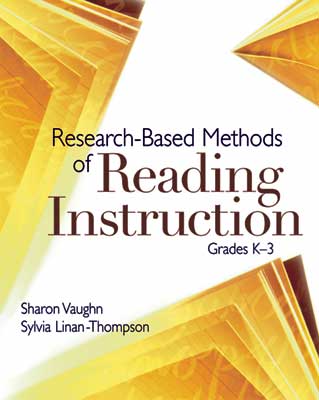
This book is designed to show teachers what we have learned from science-based reading research, and how they can best use that research to teach initial reading effectively. It is also designed to provide dozens of classroom activities that promote reading, drawn from practices that have been successful in actual classrooms and are based on solid research. The material in this book can be used with all students regardless of any special issues or needs, including those with dyslexia, at-risk for reading problems, or who simply require additional instruction to become successful readers.
Who benefits from scientifically based approaches to reading? Everyone! Recent National Assessment of Educational Progress (NAEP) reports state that as many as 38 percent of all 4th graders cannot read well enough to comprehend a simple children's book (2003). Without science-based approaches to reading, students with reading or language difficulties, attention or learning problems, a specific disability related to reading, and limited proficiency in English also risk being left behind.
Many students will learn to read as long as teachers use a substantial and consistent approach. We can optimize learning for students by using approaches that are validated by research. This book provides teachers and administrators with the essential elements of proven reading methods, and with classroom lessons for teaching them. The essential elements identified in this book—phonemic awareness, phonics/word study, fluency, vocabulary, and comprehension—and the corresponding classroom activities relate both to Reading First and to the No Child Left Behind Act of 2001.
Chapter 1 makes the case for using scientific research in the teaching of reading. Chapters 2–6 are devoted to different essential elements, and include clear definitions of the elements, suggestions for teaching them, several sample lessons, and annotated bibliographies useful for classroom teachers. These chapters are organized around questions, followed by a long section of classroom activities. For example, Chapter 2 is divided into the following sections:
- What Is Phonemic Awareness?
- Why Should I Teach Phonemic Awareness?
- What Are the Phonemic Awareness Skills That Students Should Know?
- How Do I Teach Phonemic Awareness?
- What Are Some Useful Classroom Phonemic Awareness Activities?
Chapter 7 closes the book with an overview of how to put the ideas presented to use in the classroom. Some may wish to read Chapter 7 before reading anything else, as it may help put the other chapters in perspective, though not everything will be fully understood until the rest of the book is read.
We intend this book to provide readers with a comprehensive introduction to the case for the scientific teaching of reading, and with enough material to proceed with their own substantial program.
Copyright © 2004 by Association for Supervision and Curriculum Development. All rights reserved. No part of this publication—including the drawings, graphs, illustrations, or chapters, except for brief quotations in critical reviews or articles—may be reproduced or transmitted in any form or by any means, electronic or mechanical, including photocopy, recording, or any information storage and retrieval system, without permission from ASCD.