
Conference Countdown
Washington, D.C.
June 28-30, 2013
  • membership
  • my account
  • help

    We are here to help!

    1703 North Beauregard Street
    Alexandria, VA 22311-1714
    Tel: 1-800-933-ASCD (2723)
    Fax: 703-575-5400

    8:00 a.m. to 6:00 p.m. Eastern time, Monday through Friday

    Local to the D.C. area, 703-578-9600, press 2

    Toll-free from U.S. and Canada, 1-800-933-ASCD (2723), press 2

    All other countries (International Access Code) + 1-703-578-9600, press 2

  • Log In
  • Forgot Password?


Washington, D.C.

Conference on Teaching Excellence

June 28–30
Washington, D.C.

Get up-to-date on recent revelations about best practices in the classroom, how to make them routine in every grade and subject, and how to scale them systemwide. 

Permissions

ASCD respects intellectual property rights and adheres to the laws governing them. Learn more about our permissions policy and submit your request online.

Policies and Requests

Translations Rights

Books in Translation

Sale Book (1999)
Related Topics

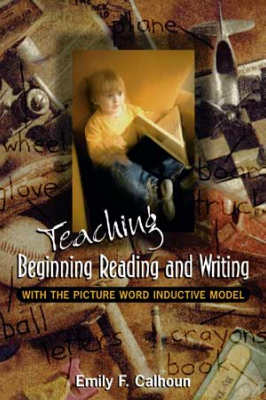
Teaching Beginning Reading and Writing with the Picture Word Inductive Model

by Emily F. Calhoun

Table of Contents

Endnote


My belief in the power of reading well and widely led me into teaching and into the English language arts. Twenty-seven years later I still believe that reading can open windows on the world and provide possibilities in life far different and far better than what you might experience daily. Reading allows interaction with persons and cultures like and unlike your own family and surroundings; reading is an avenue for becoming highly educated and is available to almost everyone. Reading can help you see choices you did not see before—choices that can make you who you are.


We—as teachers—hold the keys to literacy for many students, the keys that provide access and choice. For students, the more words they have in their listening and speaking vocabularies, the more understanding they have of the world around them; the more words they have in their reading and writing vocabularies, the more control and choice they have both in and out of school, along with greater access to knowledge and experience and greater potential for teaching themselves; the more understanding they have of how language works, the more powerful they can be as communicators and citizens.

One of the challenges facing teachers is to tap into the natural ability of young people to seek meaning and enjoy social interchange. We inquire into our surroundings from the moment of birth. Very early we desire to be part of and in control of some aspects of our environment. We want to belong in our cultural surroundings; language facility helps to provide cultural security and, in many cases, academic success. By teaching students to read and write in ways that closely resemble how young children acquire the speaking vocabulary of their culture, we can perhaps help students progress more quickly and effectively. I am not saying reading and writing are natural biological processes, but I am saying we can design instruction so that students can learn by analyzing how language works and by actively, cognitively engaging them in this analysis.

Our journey into teaching and language literacy never ends.

I have written this book as a hymn for language learning and teaching. It is my accolade to what is and to what is possible. Through form, tone, and voice, I have tried to take readers into classrooms of skillful teachers using a simple but powerful teaching strategy that brings many students rapidly and naturally into greater literacy. I hope I have tempted you into trying the picture word inductive model in your classroom or school and watching what happens for students. My success depends on what you do now.


Loading Comments...