Conference Countdown
Washington, D.C.
June 28-30, 2013
  • membership
  • my account
  • help

    We are here to help!

    1703 North Beauregard Street
    Alexandria, VA 22311-1714
    Tel: 1-800-933-ASCD (2723)
    Fax: 703-575-5400

    8:00 a.m. to 6:00 p.m. Eastern time, Monday through Friday

    Local to the D.C. area, 703-578-9600, press 2

    Toll-free from U.S. and Canada, 1-800-933-ASCD (2723), press 2

    All other countries (International Access Code) + 1-703-578-9600, press 2

  • Log In
  • Forgot Password?


Washington, D.C.

Conference on Teaching Excellence

June 28–30
National Harbor, Md
.

Get up-to-date on recent revelations about best practices in the classroom, how to make them routine in every grade and subject, and how to scale them systemwide. 

Permissions

ASCD respects intellectual property rights and adheres to the laws governing them. Learn more about our permissions policy and submit your request online.

Policies and Requests

Translations Rights

Books in Translation

Whole Child Network of Schools

Whole Child Network

E-mail us your questions about the Whole Child Network.

In May 2012, ASCD selected a group of schools from across the continental United States and Guam to become part of the ASCD Whole Child Network. 

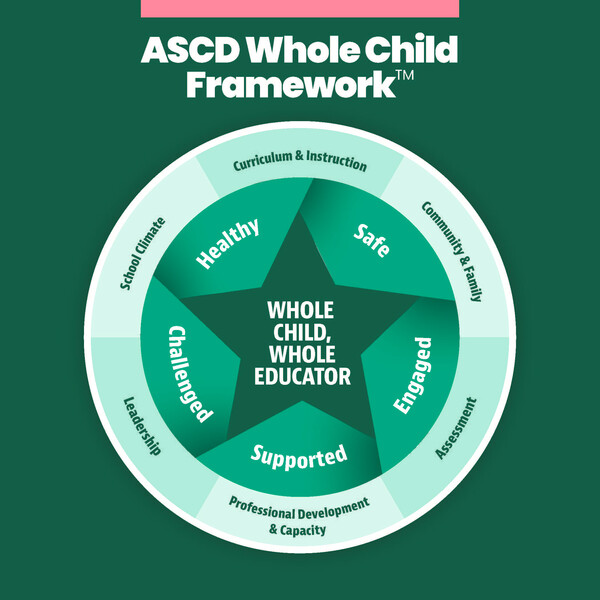
The schools are committed to a three-year, comprehensive school improvement process using the tenets of the Whole Child Initiative—healthy, safe, engaged, supported, and challenged—and their indicators (PDF) as a sustainable whole child approach to educating their students.

Since the selection of the ASCD Network of Schools, each school has participated in both on-site professional development and virtual capacity building to address the needs identified by their results from ASCD School Improvement Tool. 

The schools have also developed action plans and worked with the external researcher to collect data for this comprehensive process. Each school received one site visit in the fall 2012 semester and the second visit is planned for the spring 2013 semester.


Whole Child Network Schools

Albert Harris Elementary School (Martinsville City Public Schools) in Martinsville, Va.
Principal:
Felicia Preston
Mission:
"Learning Together, Reaching and Teaching, Every Child, Every Day, Every Way"

Albert Harris Elementary is a public K–5 school with just over 500 students and 100 staff members. The school hosted its first Fall Festival in November 2012 and is looking forward to working more closely with parent, clergy, and community volunteers.


Drew-Freeman Middle School (Prince George's County Public Schools) in Suitland, Md.
Principal: Marla Dean
Mission: At Drew-Freeman Middle School, a quality education is a civil right. We will educate all students by developing critical thinkers, cultivate a safe and orderly environment, and meet the unique needs of our students with excellence and equity.

Drew-Freeman Middle School is a public school that serves grades 7–8 with 657 students and 64 staff. Teachers have started to infuse whole child tenet discussions in their advisory periods with students, and they shared with parents and the community during back-to-school night. 


Finegayan Elementary School (Guam Department of Education) in Dededo, Guam
Principal: Evangeline Iglesias
Mission:
To enable all students to succeed in meeting the challenges of an ever-changing global society.

Finegayan, pronounced Fin-eh-gah-zan, is a public school serving K–5 with 87 staff members and almost 1,000 students. Every morning all students are greeted and guided with a warm welcome by all staff, including school leadership, the professional teaching team, and the custodial staff, demonstrating the school’s commitment to a positive culture and climate.


Fredstrom Elementary School (Lincoln Public Schools) in Lincoln, Neb.
Principal: Vicki Schulenberg
Mission:
To provide a safe, caring, and academically rigorous environment where our community–students, staff and families–

  • BELIEVE all students will…
  • ACHIEVE academic excellence and social growth, in order to…
  • SUCCEED in school and in life.

Fredstrom Elementary is a public school that serves K–5, with just about 500 students and 59 staff members. Their classrooms are pods and designed within a foursome for collaborative teaching. 


Holly Glen Elementary School (Monroe Township Public Schools)in Williamstown, N.J.
Principal:
Thomas Myers
Mission: Building a Bridge to the Future: Holly Glen Elementary School will provide ALL children with a positive, challenging, and creative learning experience, which empowers them to become responsible and productive citizens. Working together, the children, staff, parents, and community will commit themselves to the development of the whole child. By using diverse strategies, the children will demonstrate

  • Critical thinking and creative problem solving,
  • Positive self-expression and self-image,
  • Exemplary character traits,
  • 21st century technology skills, and 
  • A desire for lifelong learning.

Holly Glen Elementary is a public school for preK–4th grades. There are 59 staff members and almost 600 students. Recently the school expanded its breakfast program to serve 60 more students. 


LeSueur-Henderson High School/Middle School (LeSueur-Henderson Public Schools–Independent School District #2397) in LeSueur, Minn.
Principal:
Kevin Enerson
Mission:
Le Sueur-Henderson High School…where every student's success matters.

LeSueur-Henderson is a public school serving 6–12 grades, with more than 550 students and 68 staff. Newly installed water bottle refilling stations throughout the building encourage a healthy and green lifestyle for students and staff.


Martinsville High School (Martinsville City Public Schools) in Martinsville, Va.
Principal:
Ajamu Dixon
Mission: "Where Learning Has No Limits and Academic Excellence Is Measured One Child at a Time"

Martinsville High is a public school that serves grades 9–12. It has 91 staff members and 665 students who are excited about the opportunities that are becoming available to them due to their connection with ASCD.


Odyssey Community School (Santa Clara County Office of Education) in San Martin, Calif.
Principal: Jesse Ramos
Mission:
Our students will learn in a personalized environment that fosters human dignity and promotes academic, social, emotional, and personal success.

Odyssey Community School is an alternative school that serves grades 9–12. The population is small, with only 43 students and a staff of 11.


PS 9, The Teunis G. Bergen Elementary School (New York City Department of Education) in New York, N.Y.
Principal: Sandra D’Avilar
Mission: Our mission is to teach our students how to maximize their potential. Our strength comes from engaging parents and the local community in the education of our children. Challenging minds. Building character. Creating community.

PS 9 is a public community school serving K–5 with 594 students and 72 staff members. When the current principal came aboard, she walked every street of the neighborhood to introduce herself to the community.  


Urban Community School (Diocese of Cleveland) in Cleveland, Ohio
Principal:
Pam Delly
Mission:
Urban Community School provides primarily low-income children from Cleveland's near west side with an individualized, innovative, and challenging education. Founded and sponsored by the Ursuline Sisters of Cleveland, UCS is an ecumenical school in the Catholic tradition.

Urban Community is a charter school serving preK–8, with 452 students and 42 staff members. Its overall strategy encompasses differentiation and personalization for each student. 

^ Return to top


Process 

During the 2012 summer institute held at ASCD, teams of administrators and teachers from participating schools gathered to formulate strategies and learn tactics for implementing the whole child approach to education in their schools. Elements of those plans include needs assessments; customized face-to-face trainings; and the deployment of tools, products, and services that address the various needs identified by the assessment.

Additionally, participating schools will

  • Complete a comprehensive, schoolwide pre- and post-assessment based on the tenets and indicators.
  • Engage a planning, decision-making, and implementation team that is representative of the whole school.
  • Conduct an objective comprehensive data review of assessment results facilitated by ASCD.
  • Adopt and implement a planning process.
  • Form collaborative, working partnerships with community-based organizations.
  • Participate in ongoing professional development with the school team and community.
  • Assess student and staff engagement in the school community.
  • Participate in an evaluation of the process directed by ASCD.


^ Return to top

Support 

To support the implementation of a whole child approach, participating schools receive

  • A $10,000 grant for the 2012–13 school year. Continued participation in the network will be contingent on the school's demonstrated progress.
  • One full day of on-site training facilitated in partnership with ASCD staff to introduce the whole child approach within the school community.

Participating schools also receive individualized support from ASCD in developing a plan to implement a whole child approach to education in their schools, including a needs assessment. The implementation will be customized using both face-to-face training and virtual and print services, tools, and products that address the various needs identified by the assessment, such as instructional program improvements, job-embedded professional development, student support, health and safety, and teacher/leader effectiveness. 

As a result of this support and training, schools will be able to

  • Make the instructional and student support changes necessary to support school improvement efforts.
  • Build a culture of success in school and develop opportunities to expose students to college and career options and guidance.
  • Create opportunities for teachers and other staff to learn about, practice, implement, and evaluate research-based strategies that address identified problems and are aligned to school goals.
  • Establish practices to develop the conditions for learning within a positive school culture and climate.

Other benefits for participating schools include