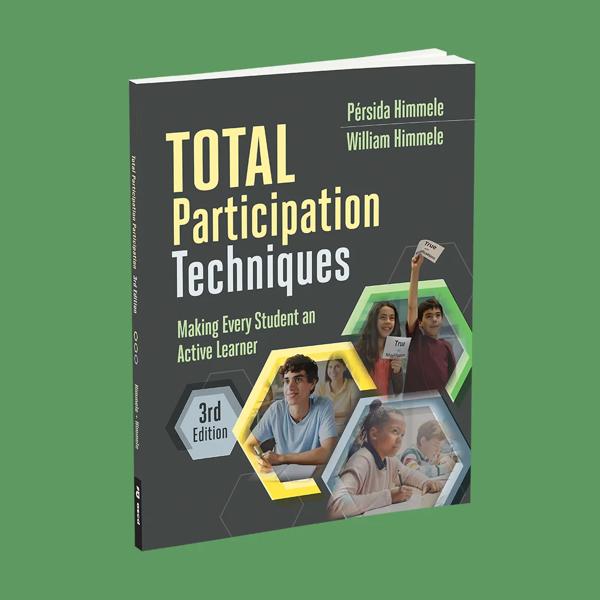
Premium, Select, and Institutional Plus Member Book
(Jan 2003)
by Robert J. Marzano
A teacher-level factor that affects student achievement is “instructional strategies.” It is perhaps self-evident that more effective teachers use more effective instructional strategies. It is probably also true that effective teachers have more instructional strategies at their disposal.
Since the middle of the 20th century, chess masters have been a subject of fascination for psychologists (deGroot, 1946; Chase & Simon, 1973; Simon, 1980). One general conclusion is that over time they have learned to recognize thousands of possible chess piece arrangements and their associated counter moves. By one estimation, the chess master has acquired 50,000 such chunks of information (see Anderson, 1995). Using David Berliner's analogy (1986), we might reason that the expert teacher has acquired a wide array of instructional strategies along with the knowledge of when these strategies might be the most useful.